 ultimate-guide
Why Clean Label Supplements Matter: A 2026 Guide
Table of Contents
- Why Clean Label Supplements Matter More Than Ever
- How to Read Supplement Labels Without Getting Fooled
- Natural Supplements vs Synthetic Supplements: What the Difference Means for You
- Supplement Fillers and Additives: The Ingredients Hiding in Plain Sight
- Third-Party Tested Supplements: The Verification Step Most Brands Skip
- Clean Label Supplements: What to Look For and What to Ignore
- Frequently Asked Questions
Last Updated: October 8, 2026
Why Clean Label Supplements Matter More Than Ever
Walk down any supplement aisle and you'll see the same words repeated on nearly every bottle: natural, pure, premium. The labels promise a lot. The ingredient lists often tell a different story. That gap between marketing language and what's actually inside the capsule is exactly why clean label supplements matter.
A clean label supplement is a supplement formulated without artificial fillers, synthetic dyes, unnecessary additives, or vague proprietary blends, with every ingredient disclosed at its actual dose on the label.
That definition sounds simple. In practice, very few products meet it.
The challenge is that supplement regulation in the United States works differently than most shoppers assume. Under the FDA's dietary supplement guidance, supplements are regulated more like food than drugs, which means products can reach shelves without the pre-market safety review required for pharmaceuticals. That single fact explains why label literacy matters so much.
Below, we'll walk through how to read a Supplement Facts panel line by line, what fillers and additives actually do, why third-party testing separates trustworthy brands from the rest, and how to spot the red flags that most shoppers miss.
How to Read Supplement Labels Without Getting Fooled
Reading a supplement label correctly means checking three things in order: the Supplement Facts panel, the "Other Ingredients" list, and any third-party certification seal. Most people only look at the first.
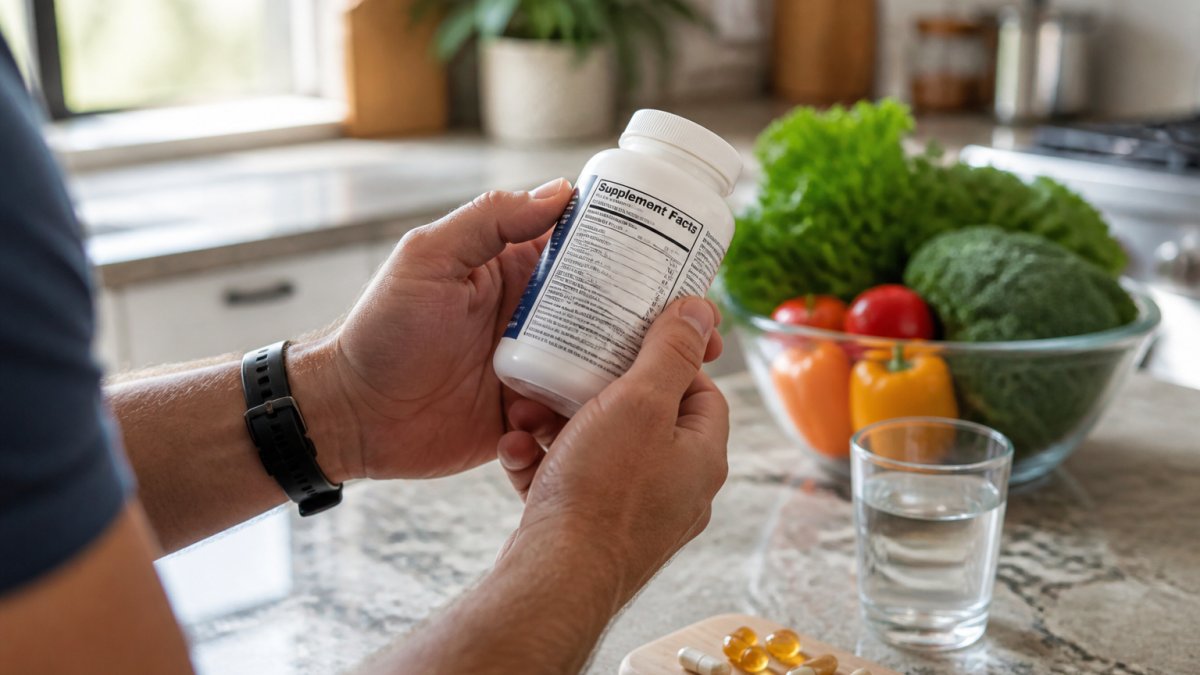
The order matters because each section hides a different kind of problem. The facts panel tells you what's supposed to be inside. The other ingredients list tells you what's actually holding it together. The certification seal tells you whether anyone independent verified either claim.
The Supplement Facts Panel: What Each Line Tells You
The Supplement Facts panel lists every active ingredient with its amount per serving. Start with serving size, because a bottle claiming "60 capsules" means nothing if a serving is three capsules.
Then check the units. Vitamins and minerals appear in milligrams (mg) or micrograms (mcg). Herbal extracts should list a standardized percentage, such as "standardized to 10% extract." A number without a unit or standardization note is a warning sign.
What most guides miss is the "% Daily Value" column. For ingredients with an established daily value, this shows how much of your daily need one serving provides. For ingredients without one, you'll often see an asterisk with "Daily Value not established." That's legal, but it also means the dose is unregulated by any standard.
Other Ingredients: Where Hidden Additives Live
The "Other Ingredients" line is where supplement fillers and additives hide in plain sight. These are the substances that make a capsule hold its shape, extend shelf life, or add color.
Common entries include magnesium stearate, silicon dioxide, titanium dioxide, and artificial colors like FD&C Yellow No. 5. Some are harmless in small amounts. Others, particularly synthetic dyes and certain preservatives, are the exact ingredients clean label shoppers want to avoid.
Our rule of thumb: if you can't pronounce it and it isn't a vitamin, mineral, or herb, look it up before you buy. A short "Other Ingredients" list is usually a good sign. A list longer than the active ingredients is a red flag.
Natural Supplements vs Synthetic Supplements: What the Difference Means for You
The difference between natural supplements vs synthetic supplements comes down to how the nutrients are sourced. Natural versions are extracted from plants, foods, or whole-food sources. Synthetic versions are created in a lab to mimic the same molecular structure.
Here's where it gets interesting. A synthetic vitamin C and a naturally derived vitamin C can share an identical chemical formula. Your body may absorb them similarly. But the two products often differ in everything around that molecule: the co-factors, the carrier compounds, and the additives used to stabilize them.
Many people find that naturally sourced nutrients come with the trace co-factors that help absorption. Synthetic versions often need additional binders or fillers to achieve a similar effect, which is why a "natural" label claim and a clean label claim aren't automatically the same thing.
Supplement Fillers and Additives: The Ingredients Hiding in Plain Sight
Fillers and additives serve real manufacturing purposes, but that doesn't mean every one belongs in your daily routine. Understanding what each does helps you decide which to accept and which to avoid.
Common Fillers and What They Do
| Filler or Additive | Purpose | What to Watch For |
|---|---|---|
| Magnesium stearate | Prevents ingredients from sticking to equipment | Common and generally tolerated; often overused |
| Silicon dioxide | Absorbs moisture, prevents clumping | Generally regarded as safe in small amounts |
| Titanium dioxide | Whitens and brightens capsules | Avoid if you prefer dye-free formulas |
| Microcrystalline cellulose | Adds bulk to fill capsules | Cheap filler with no nutritional value |
| Artificial colors (FD&C dyes) | Improves appearance | Unnecessary in most supplements |
None of these will harm most people in trace amounts. The issue is cumulative. If you take several supplements daily, each with a handful of fillers, the additive load adds up fast.
Why 'Proprietary Blend' Is a Red Flag
A proprietary blend lets a manufacturer list total blend weight without disclosing individual ingredient amounts. You might see "Immune Support Blend... 500 mg" with ten ingredients beneath it, none with their own number.
That structure makes it impossible to know whether the blend contains a meaningful dose of anything or a trace amount of everything. A brand with nothing to hide lists each ingredient separately. A brand hiding behind a blend is asking you to trust a number you can't verify.
Third-Party Tested Supplements: The Verification Step Most Brands Skip
Third-party tested supplements are products sent to an independent lab that verifies ingredient identity, potency, and purity, including screening for heavy metals, contaminants, and undeclared substances.
That independence is the entire point. A brand testing its own product is grading its own homework. An outside lab has no incentive to pass a batch that shouldn't pass.
Look for seals from established testing organizations, and understand what each verifies. Some programs confirm that a product contains what the label claims. Others go further and test for contaminants like lead, arsenic, and mercury, which can appear in herbal ingredients grown in contaminated soil. The NSF International supplement certification program is one example of an independent verification body that tests for both content and contaminants.
What most shoppers don't realize is that testing is voluntary. No rule requires a supplement brand to submit its products for independent verification before selling them. That means the brands that do it are choosing to be held to a higher standard, and that choice is one of the clearest signals of a clean label commitment.
Clean Label Supplements: What to Look For and What to Ignore
Use this checklist the next time you pick up a bottle. It takes about two minutes and filters out most of the noise.
- Short ingredient list: Active ingredients plus a handful of recognizable others, nothing more
- No proprietary blends: Every ingredient listed with its own amount
- No artificial dyes or colors: Skip FD&C dyes and titanium dioxide
- Standardized herbal extracts: Percentages listed, not vague "extract" claims
- Named third-party certification: A verifiable seal, not a self-reported claim
- Clear allergen and sourcing statements: You know what's in it and where it came from
Ignore the front label entirely. "Premium," "advanced," and "doctor-formulated" are marketing terms with no regulatory definition. The back label is where the truth lives.
At Flu-Jack, this is the standard we hold our own formulas to. We formulate with carefully selected natural ingredients, keep our ingredient lists transparent, and design our products to support immune function and healthy circulation as part of a daily wellness routine. Customers like Linda Smith put it simply: "I appreciate that Flu-Jack is made with natural ingredients."
Frequently Asked Questions
What does clean label mean for supplements?
A clean label means the product avoids artificial colors, synthetic fillers, and unnecessary additives. The label lists recognizable ingredients, the amounts are transparent, and the manufacturer can show third-party testing results. It does not guarantee the supplement works, but it does tell you exactly what you are swallowing.
Are clean label supplements safer or healthier?
Clean label supplements reduce your exposure to fillers and additives you do not need, but 'clean' is not a regulated term. Safety depends on third-party testing for purity and potency. Look for a Certificate of Analysis from an independent lab, and check whether the product has been tested for heavy metals and microbial contamination.
How can you tell if a supplement has a clean label?
Read the Other Ingredients list first. If it reads like a chemistry set, put it back. Look for a short list of recognizable ingredients, no artificial dyes, and no proprietary blends. Then check the brand's website for third-party test results. If they do not publish them, that tells you something.
What does third-party testing tell you about a supplement?
Third-party testing verifies that what is on the label matches what is in the bottle. It checks for potency, heavy metals, microbes, and contaminants. A passing result from an independent lab is the strongest signal a brand can give you. Without it, you are trusting marketing copy, not evidence.
The supplement aisle rewards brands that hide behind vague blends and pretty front labels. Reading the back of the bottle is the fastest way to see through it. If you want a daily supplement built on transparent, natural ingredients without the fillers and dyes, Flu-Jack offers all-natural formulas designed to support immune system function and healthy circulation, made for people who read labels before they buy. Shop now and start your routine with ingredients you can actually account for.