 ultimate-guide
Clean Label Wellness Supplements: What to Buy in 2026
Table of Contents
- What Clean Label Supplements Actually Mean for Your Health
- How to Read Supplement Labels Like a Pro
- Third-Party Supplement Testing: What Certifications Matter
- Are Natural Supplements Worth It? A Cost-Benefit Breakdown
- Supply Chain Traceability: Where Your Ingredients Come From
- Labeling Compliance and Legal Pitfalls to Watch For
- How to Purchase Clean Label Wellness Supplements That Fit Your Routine
- Frequently Asked Questions
Last Updated: September 20, 2026
What Clean Label Supplements Actually Mean for Your Health
Clean label supplements are products formulated without artificial fillers, synthetic additives, or unnecessary ingredients, with every component disclosed on the label. This guide from Flu-Jack explains what that standard means in practice, because the term itself carries no legal definition in the supplement industry. When you purchase clean label wellness supplements, you are relying on a manufacturer's voluntary commitment rather than a regulated claim.
Here's the tension most buyers miss. A bottle can say "all-natural" while still containing magnesium stearate, titanium dioxide, or synthetic dyes. Those ingredients exist for manufacturing convenience, not for your health. The label looks clean because the marketing is clean, not because the formula is.
Below, we'll show you exactly how to read a supplement label, which certifications carry real weight, and where the extra cost of a clean formula actually goes.
How to Read Supplement Labels Like a Pro
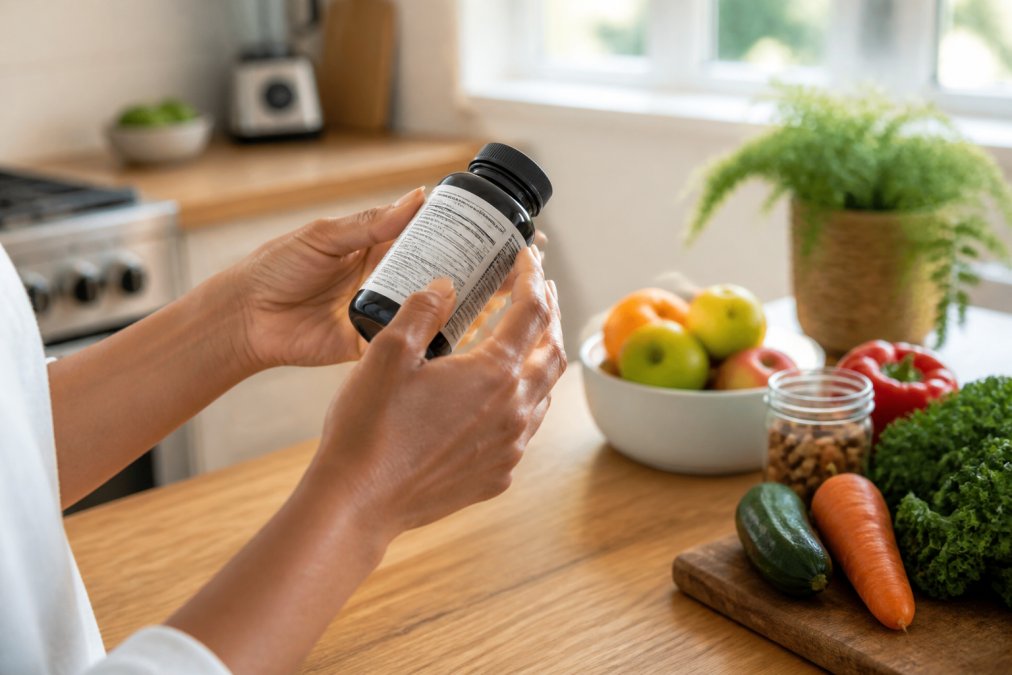
Reading a supplement label well means checking three things in order: the Supplemental Facts panel, the "Other Ingredients" line, and the allergen statement. Most shoppers read only the first and skip the other two, which is where the problems hide.
Decoding the Supplemental Facts Panel
The Supplemental Facts panel lists active ingredients and their amounts per serving. Check that the amount matches what clinical research uses, not just that the ingredient appears at all. A formula listing a nutrient at a fraction of its studied dose is there for the label, not for you.
Red Flags: Ingredients to Avoid
Watch for artificial fillers, synthetic additives, and vague proprietary blends that hide individual doses. Titanium dioxide, magnesium stearate in excess, and artificial colors are common in conventional products. If the "Other Ingredients" line is longer than the active list, that tells you where the formula's priorities sit.
Third-Party Supplement Testing: What Certifications Matter
Third-party supplement testing is independent verification of a product's identity, purity, and potency by a lab with no financial stake in the result. It matters because the FDA regulates supplements as food, not drugs, so pre-market approval is not required.
Look for manufacturing certification that signals good manufacturing practices, plus testing that screens for heavy metal screening, pesticide residue, and plasticizers. Batch testing results should be traceable to a specific lot number on your bottle. Non-GMO and organic certification add another layer where relevant.
What most guides miss is that a certification logo means little without a lot number you can match to a test report. Ask the manufacturer for it directly.
Are Natural Supplements Worth It? A Cost-Benefit Breakdown
Natural supplements cost more because cleaner raw materials, verified sourcing, and independent testing all carry real expense. Whether that premium is worth it depends on what you're buying the product to do, and on which side of the transaction you sit.
Where the Premium Actually Comes From
Four cost drivers explain most of the price gap between a conventional formula and a clean label one:
- Raw materials. Identity-verified botanical extracts, non-GMO excipients, and organic-certified inputs cost more per kilogram than commodity alternatives, and they carry longer lead times.
- Testing. Third-party identity, potency, heavy-metal, and microbial testing adds a per-batch cost that conventional manufacturers often skip or self-report.
- Documentation. Supplier qualification, certificates of analysis, and traceability records require staff time that shows up in the unit price.
- Lower volume. Clean label runs are frequently smaller, so fixed costs spread across fewer units.
| Factor | Conventional Formula | Clean Label Formula |
|---|---|---|
| Ingredient sourcing | Often undisclosed | Traceable to supplier |
| Testing | Minimal or none | Batch-tested, third-party |
| Additives | Fillers, dyes common | Limited, disclosed |
| Label accuracy | Self-reported | Independently verified |
| Documentation | Rarely available | COA per lot on request |
| Cost | Lower upfront | Higher upfront |
The Retailer's Math
For a retailer or brand owner, the question is not whether clean label costs more, it does, but whether the premium converts. A common pattern is that clean label positioning supports a higher price point and better repeat purchase rates, because the buyer who reads labels is the buyer who reorders. The trade-off is real: a clean label SKU may sit at a higher shelf price than a conventional competitor, and it will lose on price alone if the shopper never reads the panel.
The Consumer's Math
For daily wellness use, the higher upfront cost buys ingredient transparency and label accuracy you can verify. For occasional use, the gap matters less. The honest answer: clean label is worth it when you take the product consistently and want to know what's actually in it, and when the brand can show you the paperwork behind the claim.
Supply Chain Traceability: Where Your Ingredients Come From
Supply chain traceability means a manufacturer can name the supplier, country of origin, and handling history for each raw material in the finished product. Few brands can do this fully, and that gap is one of the biggest holes in the supplement market.
Traceability protects you in two ways.
Labeling Compliance and Legal Pitfalls to Watch For
Labeling compliance is where even well-intentioned brands stumble. The FDA's guidance on dietary supplement labeling sets requirements for the Supplemental Facts panel, ingredient naming, and claim language. Getting these wrong invites warning letters and product recalls.
The Three Claim Categories
- Structure-function claims. Statements like "supports immune health" are permitted, but they must carry the disclaimer that the product is not intended to diagnose, treat, cure, or prevent any disease (the FDA). A label making these claims without the disclaimer is a red flag.
- Disease claims. Statements like "treats arthritis" or "lowers cholesterol" cross into drug territory and are not permitted on a supplement label. Any product making them is either mislabeled or not a supplement at all.
- Misleading claims. "All-natural," "clinically proven," and "doctor-formulated" are marketing language, not regulated terms. They are legal only if they are not deceptive, and the burden of proof sits with the brand.
The Greenwashing Checklist
Greenwashing is the practice of implying a clean or natural formula without substantiating it. Run this checklist against any label before you buy:
- Does the label disclose every ingredient, including excipients, or hide them in a proprietary blend?
- Is "natural" used as a standalone claim without a defined standard behind it?
- Are certifications shown as logos without a certifying body named?
- Does the product page claim "third-party tested" without offering a lot-matched report?
- Are allergen statements present and specific, or absent entirely?
- Does the label carry the required structure-function disclaimer if it makes health claims?
Formatting Pitfalls
For consumers, the practical takeaway is simple: a label that follows the rules tends to reflect a manufacturer that follows the rules elsewhere too.
How to Purchase Clean Label Wellness Supplements That Fit Your Routine
Buying clean label wellness supplements well comes down to a short verification checklist you can run in a few minutes. Use it before you commit to a brand.
- Confirm the active dose matches research-backed amounts
- Read the full "Other Ingredients" line
- Look for third-party testing with a lot-matched report
- Check for non-GMO, organic, or allergen-free certification where relevant
- Verify the manufacturer can trace raw materials to source
- Confirm the label meets FDA labeling requirements
Frequently Asked Questions
What does 'clean label' actually mean for dietary supplements?
Clean label means a supplement avoids artificial fillers, synthetic additives, and unnecessary ingredients. It typically includes natural formulations, transparent sourcing, and third-party testing. For wellness supplements, clean label also implies no artificial colors, sweeteners, or preservatives. The term isn't FDA-regulated, so brands define it differently. Look for specific claims like non-GMO, organic certification, or allergen-free on the label, and verify them through batch testing or manufacturing certification.
How can I verify if a supplement brand is truly clean label?
Check for third-party supplement testing. These verify heavy metal screening, pesticide residue, and label accuracy. Look for manufacturing certification. Request a Certificate of Analysis (CoA) from the brand, which shows batch testing results. If a brand won't share a CoA or testing details, that's a red flag. Ingredient transparency and supply chain traceability are also key indicators of a genuine clean label commitment.
Do clean label supplements cost more than standard supplements?
Yes, clean label wellness supplements often cost more because of higher-quality raw materials, third-party testing, and smaller batch production. The price difference reflects costs like heavy metal screening, pesticide residue testing, and manufacturing certification. However, the cost-benefit analysis isn't just about price. You're paying for ingredient transparency, label accuracy, and fewer synthetic additives. For daily wellness, the investment may be worth it if you value bioavailability and whole-body wellness support.
Are natural supplements worth it for immune and circulation support?
Natural supplements can be worth it when they use scientifically reviewed ingredients and third-party testing. For immune support, look for options with ingredients that may help. For circulation, certain ingredients may help. The key is quality assurance and regulatory compliance. Check for manufacturing certification and batch testing. If a brand provides a Certificate of Analysis and avoids artificial fillers, natural supplements can be a valuable part of your daily wellness routine.
The real challenge with clean label supplements is that the term is unregulated, so the burden of verification falls on you. Flu-Jack makes that easier by focusing on all-natural ingredients, immune and circulation support, and formulations designed for everyday use. If you want a supplement that fits a proactive wellness routine without hidden fillers, start with a brand that shows you what's inside. Shop now with Flu-Jack and support your everyday health with ingredients you can actually read.