 ultimate-guide
How to Choose Safe Supplements: 2026 Guide
Table of Contents
- Start With the Supplement Facts Label
- What Clean Label Supplements Actually Mean
- How Supplement Third-Party Testing Works
- Supplement Safety and Medication Interactions
- How to Spot Exaggerated Health Claims
- Where to Buy Safe Supplements
- Frequently Asked Questions
Last Updated: October 9, 2026
Start With the Supplement Facts Label
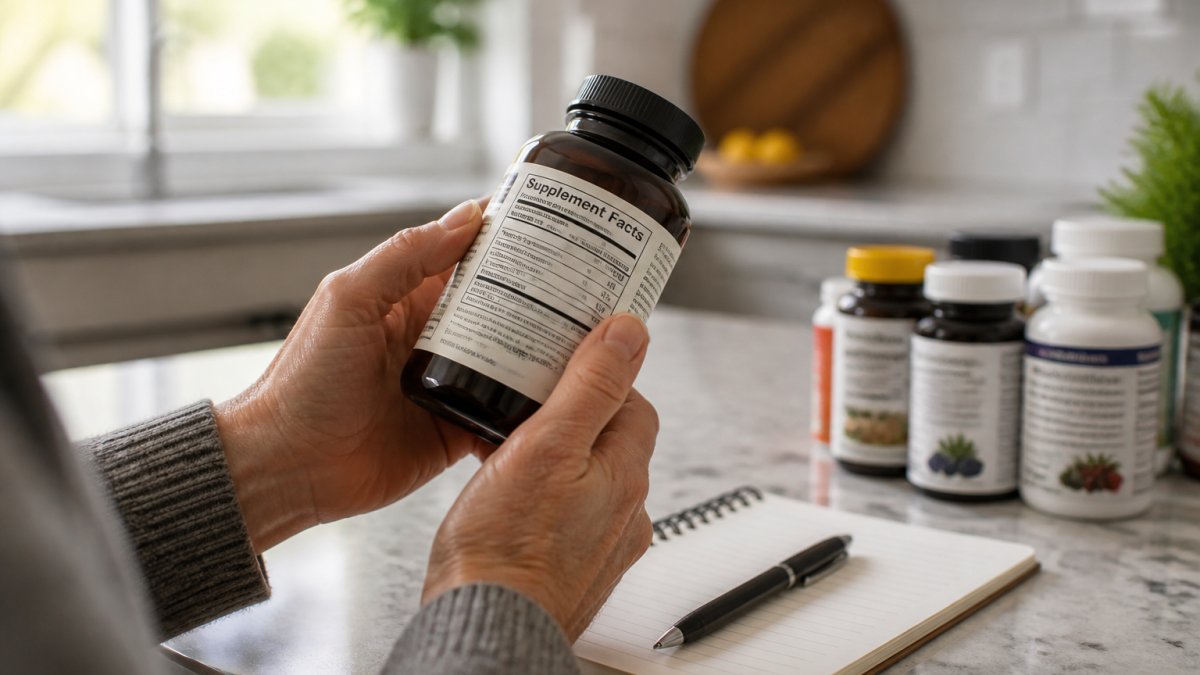
Learning how to choose safe supplements starts with one habit: read the Supplement Facts panel before you read the marketing copy. Federal rules require the Supplement Facts panel to list every dietary ingredient and its amount per serving.
Decode the Supplement Facts Panel
The Supplement Facts panel is the standardized nutrition-style box that lists serving size, amount per serving, and percent Daily Value for each ingredient.
Next, scan the ingredient list for amounts. A blend that lists "Proprietary Immune Blend 800 mg" without breaking out individual herbs gives you no way to verify whether each ingredient appears at a meaningful dose. FDA guidance on dietary supplement labeling requires manufacturers to list the quantity of each dietary ingredient, so a vague blend is a yellow flag, not a selling point.
Check the expiration date, too. Potency can decline over time, and an expired bottle is not a bargain.
Check the Other Ingredients Line
Below the active ingredients sits the "Other Ingredients" line, and this is where fillers, binders, and flow agents hide. Common entries include magnesium stearate, silicon dioxide, and various starches.
If you have a food allergy, read this line every time. Formulas get reformulated, and a capsule that was once gluten-free may change. When a label lists an ingredient you cannot identify, look it up before you swallow it.
What Clean Label Supplements Actually Mean
"Clean label" has no legal definition, which is exactly why it gets used so freely. In practice, clean label supplements are products whose labels are short, specific, and free of unnecessary fillers, artificial colors, and vague proprietary blends.
That distinction matters. A brand can print "all-natural" and "clean" on the front of a bottle while the back lists synthetic flow agents and undisclosed blend totals.
A Repeatable Label Evaluation Checklist
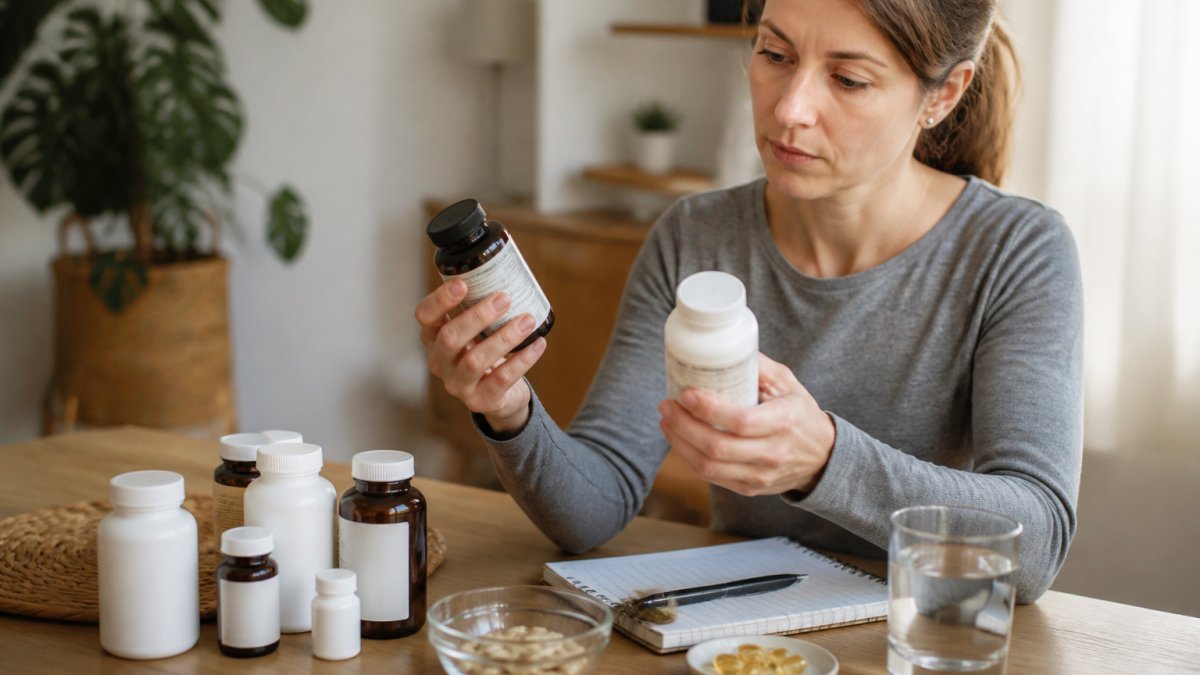
Most guides tell you to "read the label." Few give you a sequence. Use this one every time you pick up a new bottle, and you will catch the problems that marketing copy is designed to hide.
- Serving size first. Find the serving size line at the top of the Supplement Facts panel. Every number below it describes that serving, not the whole bottle, not one capsule if the serving is two. A product that says "1,000 mg" per serving but requires three capsules is a 333 mg dose per capsule.
- Match each active ingredient to a stated amount. Federal rules require the quantity of each dietary ingredient to be listed. If you see "Proprietary Blend 800 mg" with no breakdown, you cannot verify whether any single herb appears at a meaningful dose. Treat undisclosed blends as a yellow flag, not a feature.
- Check the percent Daily Value column. For vitamins and minerals, the %DV tells you how much of a nutrient one serving provides relative to a 2,000-calorie reference diet. A %DV above 100% is not automatically unsafe, but it stacks with food, fortified products, and other supplements. Fat-soluble vitamins like A, D, E, and K accumulate in the body, so repeated high-%DV doses deserve a second look.
- Read the "Other Ingredients" line. This is where fillers, binders, flow agents, and allergens live. Common entries include magnesium stearate, silicon dioxide, cellulose, and various starches. Most are harmless at these amounts, but the line is where you check for your allergens, and where you spot an ingredient you cannot identify.
- Scan the warnings and "Consult your physician" block. A serious manufacturer uses this space to flag drug interactions, pregnancy and nursing cautions, and conditions like high blood pressure or bleeding disorders. A label with no warnings at all is not reassuring; it is incomplete.
- Confirm the expiration date and lot number. Potency can decline over time, and the lot number is what you will need if you ever report a problem. Photograph both.
What "Clean" Cannot Tell You
Even a genuinely clean label, short, specific, fully disclosed, answers only one question: does the bottle say what is inside? It does not tell you whether the dose is right for you, whether an ingredient interacts with a prescription, or whether the product was manufactured under consistent conditions.
How Supplement Third-Party Testing Works
Supplement third-party testing is the practice of having an independent lab, unaffiliated with the manufacturer, verify a product's identity, potency, and purity. The manufacturer sends samples (or a certifying body buys them off the shelf) and the lab tests for what the label claims and for what it should not contain: heavy metals, microbes, and undeclared drugs.
Interpreting Seals and Certifications
Several seals appear on supplement bottles, and they do not all mean the same thing.
| Seal or Program | What It Verifies | What It Does Not Cover |
|---|---|---|
| USP Verified | Identity, potency, purity, dissolution; facility audits | Whether the product works for you |
| NSF Certified | Contents match label; contaminants screened | Clinical effectiveness |
| ConsumerLab testing | Independent product testing and results | Ongoing facility oversight |
| Brand self-testing | Whatever the brand chooses to publish | Independent verification |
A seal tells you a third party checked specific things. It does not tell you the product is right for your body, your medications, or your condition.
The Limits of Certification
Certification is a snapshot, not a guarantee. A product can pass testing for identity and purity while still interacting badly with a prescription drug or exceeding a safe level for a particular person.
That is the gap most buyers miss. A gold seal answers "is this what the label says it is?" It does not answer "is this safe for me?" Those are different questions, and only your healthcare professional can answer the second one.
Supplement Safety and Medication Interactions
Supplement safety depends on far more than label quality. Even a well-manufactured, third-party-tested product can cause harm when it interacts with a prescription medication, a medical condition, or another supplement. According to NIH Office of Dietary Supplements, dietary supplements can interact with medications and should be discussed with a healthcare provider.
Who Faces Higher Risk
Certain groups need extra caution before adding anything to their routine:
- People taking prescription medications, especially blood thinners, blood pressure drugs, and immunosuppressants
- Older adults, who often take multiple medications and metabolize ingredients differently
- Pregnant or nursing women, who should clear every supplement with a clinician
If you fall into any of these groups, bring your full supplement list to your pharmacist. FDA consumer guidance on supplements notes that some ingredients can interact with drugs or cause side effects, and a pharmacist can check for conflicts in minutes.
What to Do After an Adverse Reaction
If you suspect a supplement caused a problem, stop taking it immediately and write down what happened: the product name, lot number, dose, timing, and symptoms. Contact your healthcare provider if symptoms are severe or persistent.
Then report it. The FDA MedWatch reporting program lets consumers report adverse events and product problems directly. Reporting helps regulators spot patterns across a product or brand.
How to Spot Exaggerated Health Claims
Exaggerated claims are one of the clearest signals of a product you should avoid. Under federal law, a supplement may not claim to diagnose, treat, cure, or prevent a disease.
Watch for these red flags:
- Drug-like claims: "eliminates," "cures," "treats," "prevents"
- Miracle language: "one bottle fixes everything," "doctors hate this"
- Guaranteed results with no qualification
Legitimate supplements use careful wording like "supports" and "helps maintain," because that is what the evidence allows them to say. A brand that respects you will tell you what its product does and does not do.
Where to Buy Safe Supplements
Where you buy matters as much as what you buy. Counterfeit, mislabeled, and adulterated supplements show up disproportionately on third-party marketplaces and unfamiliar discount sites, where a seller can vanish before a problem surfaces. The safest purchases come from a manufacturer's own site or a reputable retailer with a real return policy and contact information.
Online Marketplace and Counterfeit Risks
A listing that looks identical to the brand's own page can still be a different seller, a different lot, or a different product entirely. A few practical checks cut most of the risk:
- Buy from the brand or an authorized retailer when possible. If you are on a marketplace, look for a storefront that identifies the manufacturer as the seller, not a reseller with a generic name.
- Inspect tamper evidence on arrival. A broken or missing induction seal, a loose cap, or a bottle that looks resealed is a stop sign. Do not use the product; contact the seller and the manufacturer.
- Check the lot number and expiration date against the packaging. Counterfeits often reuse a single lot number across many bottles, or print dates in a font that does not match the brand's other products.
What to Do If a Product Looks Wrong
If you suspect a product is counterfeit or mislabeled, stop using it and keep the packaging. Report the problem to the manufacturer and, if it involves a safety issue or an adverse event, to the FDA MedWatch reporting program. Regulators use these reports to spot patterns across sellers and lots, and your report may be the one that triggers a closer look.
Frequently Asked Questions
How can you tell if a supplement is safe?
Check the Supplement Facts label for accurate ingredient amounts, look for third-party testing seals like USP or NSF, and scan for allergens or fillers. Avoid products with drug-like claims or vague proprietary blends. If you take prescription medications or manage a health condition, talk to a pharmacist or healthcare professional before starting any new supplement. A safe supplement has transparent labeling, independent verification, and realistic claims.
What should you look for on a supplement label?
Look for the Supplement Facts panel with serving size, amounts per serving, and % Daily Value. Check the ingredient list for active ingredients and the 'Other Ingredients' line for fillers, artificial colors, or allergens. Verify the manufacturer's contact information and an expiration date. A trustworthy label avoids proprietary blends that hide individual ingredient amounts and lists clear, specific dosages instead of vague terms like 'herbal blend.'
What does 'clean label' mean for supplements?
Clean label supplements typically avoid artificial colors, synthetic fillers, and unnecessary additives. They emphasize recognizable ingredients and transparent sourcing. However, 'clean label' is not a regulated term, so it can mean different things across brands. Look for specific claims like 'no artificial preservatives' or 'non-GMO' rather than relying on the phrase alone. Pair clean label claims with third-party testing for the strongest quality signal.
Can supplements interact with prescription medications?
Yes. Herbal supplements like St. John's wort, ginkgo, and garlic can interact with blood thinners, antidepressants, and blood pressure medications. Vitamin K can reduce the effectiveness of warfarin. Always tell your pharmacist or doctor about every supplement you take, including dose and frequency. If you experience unexpected side effects like dizziness, bleeding, or heart palpitations, stop taking the supplement and seek medical advice promptly.
What does third-party testing tell you about a supplement?
Third-party testing verifies that a supplement contains the ingredients listed on the label, in the declared amounts, and is free from contaminants like heavy metals, pesticides, or microbes. Organizations like USP, NSF, and ConsumerLab conduct independent testing. A certification seal means the product passed specific quality checks, but it does not guarantee the supplement works for your health goals. Use testing as one factor alongside label review and medical guidance.
Should you talk to a health care professional before taking a supplement?
Yes, especially if you take prescription medications, have a chronic condition, are pregnant or nursing, or are considering a supplement for a child or older adult. A pharmacist can screen for interactions quickly, and your doctor can advise on appropriate dosage. Bring the supplement bottle or a photo of the label to your appointment. This step is critical for supplement safety and medication interactions, and it takes only a few minutes.