 listicle
7 Essential Oils for Flu Congestion and Cough Relief
Last Updated: November 6, 2026
Quick Summary
Essential oils for flu congestion and cough are comfort tools, not cures, and no oil replaces medical care for influenza. Eucalyptus and peppermint are the first choices for stuffy nose and chest tightness, while lavender supports sleep and lemon freshens a room. Use them diluted, by diffusion, steam, or chest rub, and never swallow them.
- Eucalyptus vapor may ease congestion and coughing, but never apply it undiluted to the face.
- Peppermint's menthol can help open blocked nasal passages; skip it for young children and cautious use with asthma.
- Tea tree oil shows antimicrobial activity only in lab dishes and is one of the more irritating oils.
- Check flu red flags first: trouble breathing, returning fever, confusion, or worsening symptoms after day 5 mean seek care.
- Start with one or two single oils before trying a pre-made blend, which can cost around $9.99.
Table of Contents
- Essential Oils for Flu Symptoms: What the Evidence Actually Shows
- 1. Eucalyptus Oil for Chest Congestion and Cough
- 2. Peppermint Oil for Stuffy Nose and Dry Cough
- 3. Tea Tree Oil: Antimicrobial in the Lab, Risky on Skin
- 4. Thyme, Lemon, Lavender, and Clary Sage: The Supporting Oils
- Essential Oils for Cough and Chest Congestion: A Symptom-Based Decision Guide
- How to Use Essential Oils for Cough: Diffusion, Steam, and Diluted Chest Rubs
- Essential Oils for Flu Congestion and Cough Over the Counter: Blends vs. Single Oils
- Frequently Asked Questions
Essential Oils for Flu Symptoms: What the Evidence Actually Shows
Essential oils for flu congestion and cough are plant-derived aromatic extracts that many people use to ease stuffy noses, chest tightness, and irritated airways. Many people want a natural option alongside rest, fluids, and standard care. The honest starting point: these oils are comfort tools, not cures. They can make symptoms feel more manageable, but no oil replaces medical care for influenza.
Lab Results vs. Real Life: Why the Gap Matters
A petri dish is not a person. Many essential oils show antimicrobial activity in laboratory studies, where concentrated oil meets microbes directly on a glass slide. That is a long way from a diluted drop in a diffuser reaching a virus inside your respiratory tract.
If you want the bigger picture on whether natural approaches hold up under scrutiny, our breakdown of whether natural supplements actually work walks through how evidence is graded.
1. Eucalyptus Oil for Chest Congestion and Cough
Eucalyptus oil is one of the most widely known essential oils. Health information sources, including Cleveland Clinic's guidance on essential oils, note that eucalyptus may ease congestion and coughing and may have anti-inflammatory properties that soothe sinus pressure.
How we would use it: add a few drops to a steam bowl or diffuser, or dilute it in a carrier oil for a chest rub. The vapor is the point.
2. Peppermint Oil for Stuffy Nose and Dry Cough
Peppermint is known for its menthol content, which gives a cooling sensation. The Cleveland Clinic's review of essential oils for cough specifically credits menthol with helping open blocked nasal passages, and peppermint shows up across multiple health-information resources for cough and cold symptoms.
A drop on a tissue held nearby, or a diluted rub on the chest, is the practical move. Skip it for children under school age, and be careful with anyone who has asthma, since strong menthol vapor can trigger tightness in sensitive airways.
3. Tea Tree Oil: Antimicrobial in the Lab, Risky on Skin
Tea tree oil has a reputation built almost entirely on laboratory antimicrobial findings. In a dish, it shows antibacterial and antifungal activity. In your body, during a flu infection, that evidence does not translate into a proven treatment.
Our take: if you use tea tree at all, treat it as a diluted surface or diffuser oil, not a skin treatment.
4. Thyme, Lemon, Lavender, and Clary Sage: The Supporting Oils
The second tier is where the evidence gets thin and the marketing gets loud.
Thyme. Thyme oil contains thymol, which shows antimicrobial activity in laboratory studies. That is a lab finding, not a demonstrated human benefit for flu.
Lemon. Lemon oil is discussed for a fresher-feeling room and for the perception of clearer nasal passages.
Clary sage. Clary sage appears in aromatherapy guides for cold symptoms with little human trial support.
Evidence Grading: What Kind of Study Backs Each Claim
Use this shorthand whenever you read an essential-oil claim:
- Laboratory (in-vitro) studies, oil meets microbes on a dish. Shows chemical activity only. Does not show the oil reaches a virus in your airways or helps a person recover. Most "kills flu virus" headlines stop here.
- Animal studies, suggestive, not proof for humans. Dosing, absorption, and safety differ.
- Small human trials, often measure symptom perception (how congested you feel) rather than viral clearance or recovery time. Useful for comfort claims, weak for treatment claims.
- Anecdote and tradition, the weakest tier. Fine for deciding what you enjoy; not evidence of effect.
None of the four oils in this section has strong human trial evidence for treating influenza. Their realistic job description is comfort and room scent, and that is how we would use them: lavender before bed, lemon in a diffuser, thyme in a steam bowl, clary sage for scent.
Who Should Skip These Oils
- Children. Essential oils are not appropriate for infants and young children, especially near the face; menthol and eucalyptus vapors can cause breathing problems in young children. Keep all oils out of reach and do not diffuse in a child's bedroom.
- Pregnancy and breastfeeding. Consult a clinician before using any essential oil; some are best avoided, and dilution and exposure limits differ.
- Asthma and reactive airways. Strong vapors can trigger tightness. If a scent makes breathing feel worse, stop and ventilate the room.
- Pets. Cats and dogs metabolize essential oils differently, and diffused oils can be hazardous to pets, particularly birds and cats. Keep pets out of the room during diffusion and ventilate afterward.
- Anyone taking prescription medication. Essential oils are not inert; ask a pharmacist or clinician before layering them onto standard flu care.
That is a realistic job description for this tier: comfort, scent, and sleep support, not a substitute for vaccination, antivirals when indicated, or medical care.
Essential Oils for Cough and Chest Congestion: A Symptom-Based Decision Guide
Match the oil to the symptom, not the marketing label, and match the symptom to the right level of care. Essential oils are supportive comfort measures. They do not shorten a flu infection, prevent complications, or substitute for vaccination, antiviral medication when a clinician prescribes it, or rest and fluids. Use the table below to pick a comfort measure, then use the red-flag list underneath to decide whether a comfort measure is appropriate at all.
| Symptom | First-choice oil | Method | Watch out |
|---|---|---|---|
| Stuffy nose | Peppermint | Tissue inhale or diffuser | Avoid near young children; skip if asthma is triggered by strong menthol vapor |
| Chest tightness | Eucalyptus | Steam inhalation | Never undiluted on skin; keep away from infants and young children |
| Dry, tickly cough | Eucalyptus or thyme | Diluted chest rub | Patch test first; do not apply to broken skin |
| Can't sleep while sick | Lavender | Diffuser at bedtime | Keep pets out of the room; ventilate |
| Room feels stale | Lemon | Diffuser | Dilute; avoid sun on treated skin (photosensitivity) |
| Sore throat | Peppermint or lavender (diluted, external only) | Chest or throat rub, never swallowed | Never ingest essential oils |
When Oils Are the Wrong Tool: Flu Red Flags
A common pattern in flu care is that people reach for home remedies during the window when medical care matters most. Contact a clinician promptly, and do not rely on essential oils, if you or someone in your household has:
- Trouble breathing, shortness of breath, or persistent chest pain or pressure
- A fever that returns after improving, or a fever that will not come down
- Confusion, difficulty waking, or unusual lethargy
- Severe muscle pain, dehydration (little urine, dizziness on standing), or worsening symptoms after day 5
- In children: fast breathing, bluish lips, not drinking enough, or irritability that does not improve
High-risk groups should lower the threshold for calling a clinician rather than raising it: adults 65 and older, pregnant people, children under 5, and anyone with asthma, COPD, heart disease, diabetes, or a weakened immune system. For these groups, essential oils are at best a comfort add-on and at worst a delay. The CDC's flu guidance is the reference point for when antiviral treatment is considered, antivirals work best when started early, so a delay spent on home remedies can cost you the window.
A Practical Triage Sequence
- Check the red-flag list first. If any apply, call a clinician or seek urgent care; set the oils aside.
- If no red flags apply and you are in a high-risk group, call your clinician's office the same day to ask whether testing or antiviral treatment is appropriate.
- If you are otherwise healthy with mild symptoms, use one comfort measure from the table, keep hydrating, rest, and reassess in 24 hours.
- If symptoms are worsening rather than easing at any point, stop the home-remedy track and seek care.
Our guide to boosting immunity before flu season covers the preventive side so you are not starting from scratch next time.
How to Use Essential Oils for Cough: Diffusion, Steam, and Diluted Chest Rubs
Three methods cover almost every safe use, and each has rules.
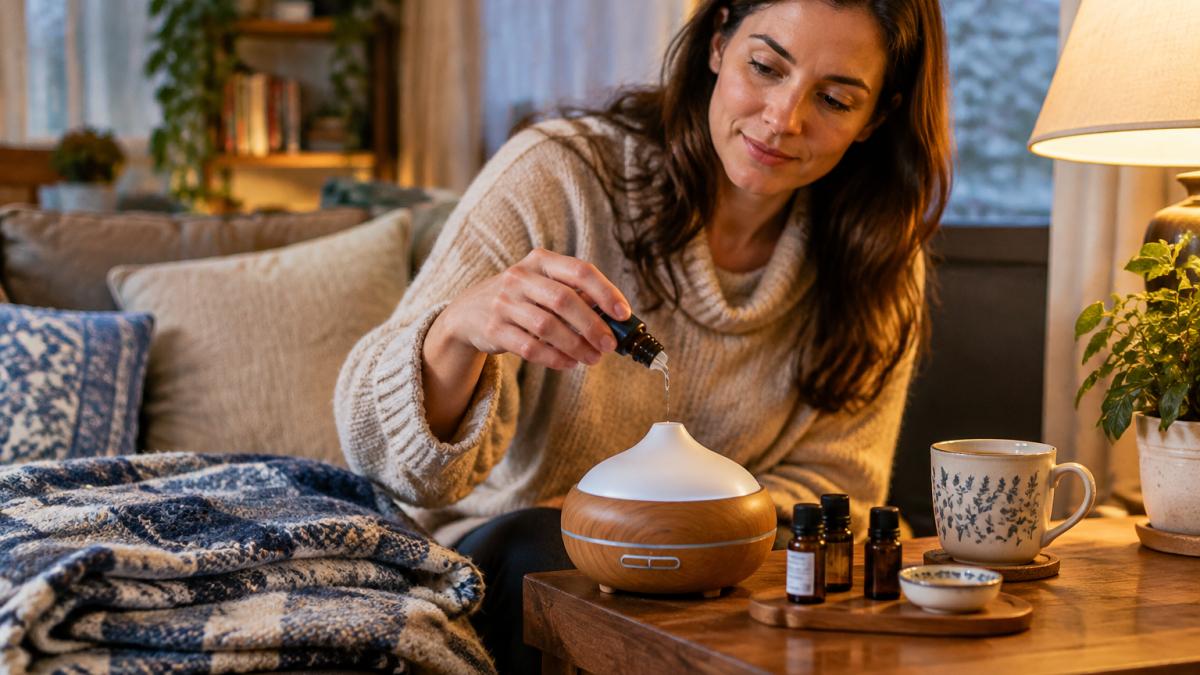
Diffusion. Add a few drops to water in a diffuser and run it in a ventilated room for short sessions.
Steam inhalation. Add a drop or two to a bowl of hot water, drape a towel over your head, and breathe the vapor for a few minutes with eyes closed.
Diluted chest rub. Mix a few drops into a carrier oil such as jojoba or almond, then massage onto the chest. Our article on how to use herbs to support your immune system explains how we think about layering natural support safely.
Essential Oils for Flu Congestion and Cough Over the Counter: Blends vs. Single Oils
Pre-made blends are convenient; single oils give you control. A ready-made blend marketed for congestion, like a diffuser blend listed around $9.99, saves you the guesswork of mixing.
If you are weighing oils against drugstore options, our comparison of natural alternatives to over-the-counter flu meds puts both side by side. And if you take prescription medication, read our guidance on taking immune supplements with medication before adding anything new.
Flu season asks a lot of your body, and comfort measures only go so far.
Frequently Asked Questions
Which essential oils may help with flu congestion and cough?
Eucalyptus oil is a widely known essential oil. Peppermint oil contains menthol, a cooling compound. Thyme, lemon, lavender, and clary sage also appear in cold and flu aromatherapy resources. These oils are used for comfort and aroma, but no essential oil treats influenza itself. Pair them with rest, fluids, and standard over-the-counter remedies, and see a doctor if symptoms are severe or last more than a few days.
How do you use essential oils for cough and chest congestion?
Three methods are common. Diffusion disperses oil into the air through a diffuser, which is the simplest option for a stuffy nose. Steam inhalation means adding a few drops to hot water and breathing the vapor carefully, never with boiling water near children. Diluted topical application uses a carrier oil such as jojoba or coconut oil at roughly 1 to 2 percent essential oil, massaged onto the chest. Never apply undiluted oil to skin, and never swallow essential oils.
Is it safe to inhale essential oils when you have the flu?
Inhalation carries its own cautions, and it is not risk-free. People with asthma should be cautious, because strong scents can trigger bronchospasm. Keep diffuser sessions short, around 15 to 30 minutes, in a ventilated room, and stop if you feel irritation or shortness of breath. Children under 2 should not be exposed to inhaled essential oils, and pets should be able to leave the room. If breathing becomes difficult, seek medical care rather than adding more oil.
Which essential oils should you avoid around children?
Several oils are considered high-risk for young children. Peppermint and eucalyptus oils should be kept away from infants and toddlers, and essential oils should be used around young children only with guidance from a pediatrician. Tea tree oil is toxic if swallowed and should never be within a child's reach. In general, children under 6 should not use essential oils topically without a pediatrician's guidance, and any diffuser use should be brief and supervised.
When should you seek medical care for flu symptoms?
Seek care promptly if you have trouble breathing, chest pain, confusion, bluish lips, or a fever that returns after improving. These are flu red flags, not congestion you can diffuse away. Also call a doctor if symptoms improve and then worsen, if you cannot keep fluids down, or if you are in a high-risk group such as older adults, pregnant people, or those with chronic conditions. Essential oils for flu congestion and cough are comfort measures, not substitutes for antiviral treatment or medical evaluation.