 blog
blog
Natural Alternatives to Over-the-Counter Flu Meds
Table of Contents
- Natural Flu Alternatives: What the Evidence Actually Shows
- Symptom-Specific Natural Remedies That May Help
- Immune System Support Supplements: What to Look For
- Drug-Herb Interactions and Safety Considerations
- When to See a Doctor for Flu
- Building a Daily Wellness Routine with Natural Alternatives
- Frequently Asked Questions
Last Updated: September 16, 2026
Natural Flu Alternatives: What the Evidence Actually Shows
When congestion, body aches, and a scratchy throat hit, many people reach for whatever is in the medicine cabinet, but natural alternatives to over the counter flu meds are worth a closer look. But a growing number are asking whether natural alternatives to over the counter flu meds can deliver the same comfort without the side effects. At Flu-Jack, we hear this question from customers who want to support their immune system with ingredients they recognize. The short answer: some natural options have real evidence behind them, and others are mostly marketing. This guide sorts the two apart, maps remedies to specific symptoms, and flags the interactions that matter.

How Natural Remedies Compare to OTC Medications
Natural remedies and OTC medications work differently. Most OTC flu products suppress symptoms: a decongestant shrinks swollen nasal tissue, a cough suppressant quiets the cough reflex, and an analgesic dulls aches and fever. Natural approaches tend to support the body's own response rather than block it. Honey coats an irritated throat. Steam and saline thin mucus congestion. Neither category cures a viral infection, but both can make the days more bearable.
The CDC guidance on flu treatment is clear that rest, fluids, and symptom management form the foundation of care for most healthy adults. Natural alternatives fit inside that framework, not outside it. The mistake is treating them as a replacement for medical care when symptoms turn serious. Used correctly, they complement each other.
Symptom-Specific Natural Remedies That May Help
Matching the remedy to the symptom is where most people go wrong. A remedy that helps a cough may do nothing for congestion, and vice versa. The matrix below maps each common flu symptom to the natural options with the strongest practical support, the typical adult amount, and an honest evidence grade so you can tell proven from anecdotal.
| Symptom | Natural Option | Typical Adult Use | Evidence Grade |
|---|---|---|---|
| Cough (dry or nighttime) | Honey | 1-2 teaspoons, alone or in warm liquid, up to a few times daily | Moderate |
| Sore throat | Saltwater gargle | 1/2 tsp salt in 8 oz warm water, gargle ~30 seconds, repeat a few times daily | Moderate |
| Sore throat | Warm tea with honey | 2-3 cups daily | Limited |
| Nasal congestion | Saline nasal irrigation | 1-2 rinses daily | Moderate |
| Congestion and thick mucus | Hydration | Steady fluids throughout the day | Strong (basic) |
| Body aches and fever | Rest and fluids | Continuous hydration plus sleep | Strong (basic) |
| Chest and sinus congestion | Steam inhalation | 5-10 minutes of warm steam, 1-2 times daily | Limited |
Evidence grades here mean: Strong (basic) for fundamentals like fluids and rest that support recovery regardless of the specific virus; Moderate for remedies with consistent but not definitive trial support; Limited for traditional options that are soothing but under-studied.
For Cough: Honey and Warm Liquids
Honey is the best-supported natural cough remedy for adults and children over one year old. It coats the throat, soothes irritation, and has mild antimicrobial properties. A common approach is one to two teaspoons taken straight or stirred into warm water with lemon, repeated as needed through the day. Many parents find it works as well as a basic cough suppressant for nighttime relief.
For Sore Throat: Saltwater Gargles and Herbal Teas
A saltwater gargle is the simplest sore throat remedy available. Dissolve about half a teaspoon of salt in a glass of warm water and gargle for roughly thirty seconds, then spit. This draws fluid from inflamed tissue and temporarily reduces swelling. Repeating it a few times daily is safe for most adults.
For Congestion: Nasal Irrigation and Hydration
Nasal irrigation with a saline solution is one of the few natural congestion remedies with solid backing. It flushes out mucus and irritants, reducing the pressure that makes congestion miserable. Use distilled, sterile, or previously boiled and cooled water, never straight tap water, and clean the device after each use. Rinsing once or twice a day is a common routine; more frequent use can irritate nasal passages.
Immune System Support Supplements: What to Look For
Immune system support supplements vary wildly in quality, and the biggest gap in most guides is dosage. A remedy name without an amount tells you nothing about whether it will help or just cost money. The label matters more than the marketing: look for a standardized extract, which guarantees a consistent amount of the active compound in every dose, and check that the product lists specific ingredient quantities rather than a vague "proprietary blend."
Zinc, Vitamin C, and Standardized Extracts
Zinc has the most consistent evidence among immune supplements, but timing and dose matter. Many studies suggest zinc lozenges may shorten a cold when started within the first day of symptoms. A common range in research is roughly 75 mg of elemental zinc per day from lozenges, spread across several doses, for no more than about a week. Taking too much zinc for too long can interfere with copper absorption and cause nausea, so follow label guidance rather than doubling up.
Dosage and Interaction Checklist Before You Buy
Before adding any supplement to your routine, run through this short list:
- Check the amount per ingredient. If the label hides doses behind a proprietary blend, put it back.
- Match the dose to the purpose. A daily baseline (like vitamin C) is different from a short-course remedy (like zinc lozenges).
- Set a stop date. Most acute-use supplements are not meant to be taken for weeks on end without a reason.
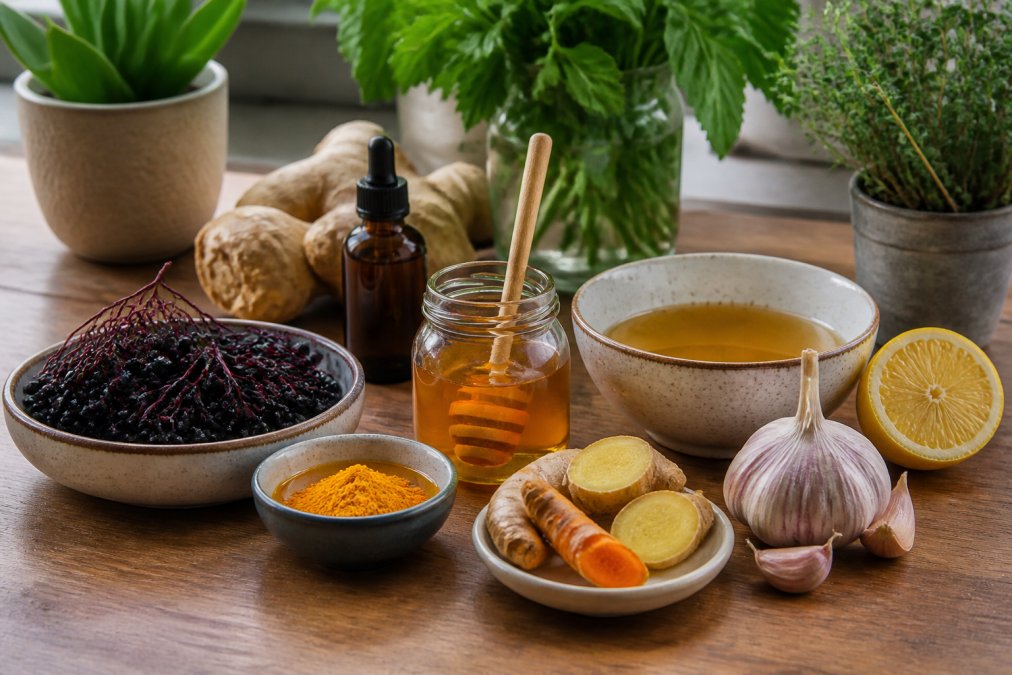
- Screen for interactions. Echinacea may work against immunosuppressants; concentrated ginger and garlic can add to bleeding risk with blood thinners; elderberry may not be appropriate with autoimmune treatments; and high-dose zinc can reduce absorption of certain antibiotics.
- Tell your pharmacist. Bring the actual bottle. A pharmacist can flag conflicts faster than any label.
Drug-Herb Interactions and Safety Considerations
This is the section most natural remedy guides skip, and it is the one that matters most. Herbs and supplements can interact with prescription medications in ways that range from mild to serious. Anyone taking blood thinners, blood pressure medication, immunosuppressants, or thyroid drugs should check with a pharmacist before adding a supplement.
Common contraindications to watch:
- Echinacea may interact with immunosuppressant medications.
- Ginger and garlic in concentrated doses can increase bleeding risk alongside blood thinners.
- Elderberry may stimulate the immune system in ways that conflict with autoimmune treatments.
- High-dose zinc can reduce absorption of certain antibiotics.
When to See a Doctor for Flu
Knowing when to see a doctor for flu is the single most important judgment call in this entire topic. Most healthy adults recover with rest and symptom care, but certain warning signs mean it is time to stop self-treating. Seek medical care if you experience difficulty breathing, chest pain, persistent dizziness, confusion, or a fever that will not break.
Building a Daily Wellness Routine with Natural Alternatives
Prevention beats treatment, and a daily routine is where natural alternatives earn their place. Rather than waiting for symptoms, build habits that support your immune system year-round. That means consistent sleep, steady hydration, regular movement, and a supplement routine you actually stick with.
A simple daily framework many people find workable:
- Morning: a full glass of water and your daily supplement.
- Midday: a balanced meal with vegetables and lean protein.
- Afternoon: a warm herbal tea instead of a third coffee.
- Evening: a consistent bedtime to protect sleep quality.
Frequently Asked Questions
What is the best natural medicine for flu?
There is no single best natural medicine for flu, but research supports several options for symptom relief. Honey can help calm coughs, saltwater gargles ease sore throats, and nasal irrigation reduces congestion. Zinc and vitamin C may shorten recovery time when taken early. Hydration and rest remain the foundation of any recovery plan. Always check with a healthcare provider before combining natural remedies with existing medications.
How do I know if a natural supplement is safe to take?
Look for third-party testing seals, standardized extracts, and clear dosage guidance on the label. Check for contraindications if you take prescription drugs, as some herbs interact with blood thinners or blood pressure medications. Start with one supplement at a time to monitor for adverse reactions. If you have underlying health conditions, talk to your doctor before adding any immune system support supplements to your routine.
Are there natural supplements that support immune function during the flu?
Yes, several supplements have evidence for immune support. Zinc lozenges may reduce flu duration if taken within 24 hours of symptom onset. Vitamin C supports immune cell function, though it does not prevent flu. Standardized elderberry extracts show antiviral properties in some clinical research. Vitamin D deficiency is linked to higher respiratory infection rates. Choose supplements with clear dosing instructions and third-party quality testing.
When should I see a doctor for flu instead of treating it at home?
Seek medical care if you have difficulty breathing, chest pain, persistent fever above 104°F, confusion, or symptoms that improve then suddenly worsen. High-risk groups, including adults over 65, pregnant women, and people with chronic conditions, should contact a doctor early. Antiviral medications work best within 48 hours of symptom onset. Natural alternatives can manage mild cases, but professional care is essential for severe or worsening symptoms.
Flu season has a way of testing even the best intentions, and the gap between feeling prepared and scrambling for relief is usually a daily habit. Flu-Jack offers an all-natural supplement formula designed to support immune system function and healthy circulation, made with carefully selected ingredients for people who want a trustworthy daily option. Get started with Flu-Jack and build a wellness routine you can keep all year.