 blog
Are Natural Supplements Actually Effective? Evidence Explained
Table of Contents
- What the Science Actually Says About Natural Supplements
- Evidence-Based Supplements: How to Spot Real Research
- Natural vs Synthetic Vitamins: Does the Source Matter?
- How to Evaluate Supplement Quality and Trustworthiness
- Dietary Supplement Safety and Interactions with Medications
- When Natural Supplements Make Sense for Your Health
- FDA Regulation and What It Means for Supplement Safety
- Frequently Asked Questions
Last Updated: October 19, 2026
What the Science Actually Says About Natural Supplements
The honest answer to "are natural supplements actually effective" is: it depends on the supplement, the health goal, and the evidence. The table below groups popular supplements by goal, evidence strength, and cautions.
| Health goal | Supplement | Evidence strength | What the research generally shows | Cautions |
|---|---|---|---|---|
| Correcting a diagnosed deficiency | Vitamin D | Strong | Consistent benefit for bone health and immune function in people with low blood levels; less clear benefit for people who are already sufficient | Toxicity at very high doses; interacts with some heart and seizure medications |
| Correcting a diagnosed deficiency | Vitamin B12 | Strong | Reliable correction of deficiency, especially in older adults, vegetarians, and people on long-term acid-reducing drugs | Masking of B12 deficiency by high-dose folic acid |
| Correcting a diagnosed deficiency | Iron | Strong | Effective for iron-deficiency anemia confirmed by blood tests | Constipation, nausea; dangerous in people with iron overload disorders |
| Heart and inflammation | Omega-3 fatty acids (EPA/DHA) | Moderate | Modest reductions in triglycerides and some inflammatory markers; cardiovascular outcome trials have been mixed | Bleeding risk at high doses, especially with blood thinners |
| Sleep and muscle symptoms | Magnesium | Moderate | May modestly improve sleep quality and reduce muscle cramps in some groups; effects are not universal | Diarrhea at high doses; interacts with certain antibiotics and bone medications |
| Digestive health | Probiotics | Moderate, strain-specific | Some strains help with antibiotic-associated diarrhea and certain digestive conditions; benefits do not generalize across products | Risk in people who are immunocompromised or critically ill |
| Nausea | Ginger | Moderate | Consistent evidence for reducing nausea, including pregnancy-related nausea, at typical doses | Bleeding risk at high doses; discuss with a clinician during pregnancy |
| Joint pain and inflammation | Turmeric (curcumin) | Moderate to weak | Some trials show reduced joint pain and stiffness; formulations and absorption vary widely | Digestive upset; bleeding risk with blood thinners |
| Cold duration | Echinacea | Weak to moderate | Modest effects on cold duration when taken early; results across studies are inconsistent | Allergic reactions, especially in people with ragweed allergy |
| Skin and joint support | Collagen | Weak | Human trials are limited and often small; some show modest skin elasticity or joint comfort changes | Generally well tolerated; evidence does not support broad claims |
| General energy | "Energy" blends and stimulant herbals | Weak | Mostly anecdotal; many products rely on caffeine or unproven blends | Hidden stimulants, interactions, and inconsistent dosing |
How to read the evidence grades
- Strong means multiple randomized trials and systematic reviews in relevant populations point the same direction, and the benefit is clinically meaningful.
- Moderate means some good trials support a benefit, but results vary by population, dose, or product formulation.
- Weak means evidence is limited to small or short studies, animal data, or tradition, and human trials are inconsistent.
A key pattern: natural supplements have the strongest evidence when correcting a measured deficiency or treating a specific, measurable symptom. General wellness claims ("boosts immunity," "supports energy") rarely hold up because the outcomes are vague.
Effectiveness by population
Evidence is not uniform across people. Older adults are more likely to benefit from B12 and vitamin D because absorption and skin synthesis decline with age. Pregnant people have specific needs (folate) but also specific risks (high-dose vitamin A). People with kidney disease, liver disease, or bleeding disorders need clinician guidance first. Athletes should prioritize third-party tested products to avoid banned substances.
Evidence-Based Supplements: How to Spot Real Research
Spotting "real research" means checking whether a study was designed well, whether the result is large enough to matter, and whether it applies to you.
The evidence hierarchy, briefly
At the top are systematic reviews and meta-analyses pooling multiple randomized controlled trials (RCTs), followed by individual RCTs, observational studies, animal and lab research, and anecdotes. A single small RCT is not strong evidence; a consistent body of RCTs reviewed together is.
The questions that separate strong from weak evidence
- Was it randomized and controlled? Participants should be assigned by chance to the supplement or a placebo, and ideally neither they nor the researchers should know who received what (double-blinding).
- How large was the sample? Small studies (under 50 participants) are prone to random error and exaggerated effects. Larger trials are more reliable.
- How long did it last? A two-week study cannot tell you about long-term benefits or risks. Look for durations that match how the supplement is actually used.
- What outcome was measured? Hard, clinically meaningful outcomes (fractures, hospitalizations, measured blood levels, validated symptom scales) matter more than vague "wellness" scores or subjective impressions.
- How large was the effect? This is the step most readers skip. A result can be statistically significant and still too small to matter in real life.
Statistical significance versus clinical meaningfulness
"Statistically significant" means the result is unlikely due to chance, not that the effect is large or important. With large samples, even tiny differences reach significance. Ask how big the change was and whether it crosses a threshold patients would notice.
Red flags in supplement marketing
- Claims like "boosts immunity" or "supports wellness" are vague and hard to test. Specific, measurable claims ("reduces cold duration by about a day") are more credible.
- Manufacturer-funded studies deserve extra scrutiny; independent replication is stronger.
- "Clinically proven" without a citation to a specific trial is marketing, not evidence.
- Testimonials and before-and-after photos are not scientific evidence; placebo effects are powerful, which is why controlled trials exist.
- Beware of cherry-picked studies. One positive trial among several null trials is not a consensus.
A quick checklist for reading a supplement study
- Who funded it, and did the authors disclose conflicts?
- Was it randomized, controlled, and blinded?
- How many participants, and how long did it run?
- What was measured, and was the outcome clinically meaningful?
- How large was the effect, and what was the confidence interval?
- Has the result been replicated by independent groups?
Natural vs Synthetic Vitamins: Does the Source Matter?
The source of a vitamin matters less than bioavailability, how well your body absorbs and uses it.
Natural sources contain other compounds that may help or hinder absorption; synthetic supplements are pure, which can be an advantage or disadvantage.
Cost is a real factor: natural supplements are often pricier due to extraction, while synthetic versions are cheaper to produce.
What matters most is dose, consistency, and whether the supplement reaches your bloodstream in usable form, a matter of formulation, not plant versus lab.
How to Evaluate Supplement Quality and Trustworthiness
Third-party testing and certification standards
Third-party testing means an independent lab verified what's actually in the bottle, important because the supplement industry is less regulated than pharmaceuticals.
Look for these certifications:
- USP (U.S. Pharmacopeia): Tests for purity, potency, and ingredient accuracy
- NSF Certified for Sport: Verifies no banned substances (important for athletes)
- ConsumerLab: Independent testing with published results you can access
- Natural Products Association: Certifies ingredient quality and purity
Certifications cost money, so pursuing them signals commitment to quality. Not all good supplements are certified, but certification is a strong positive signal.
Reading labels and checking ingredient transparency
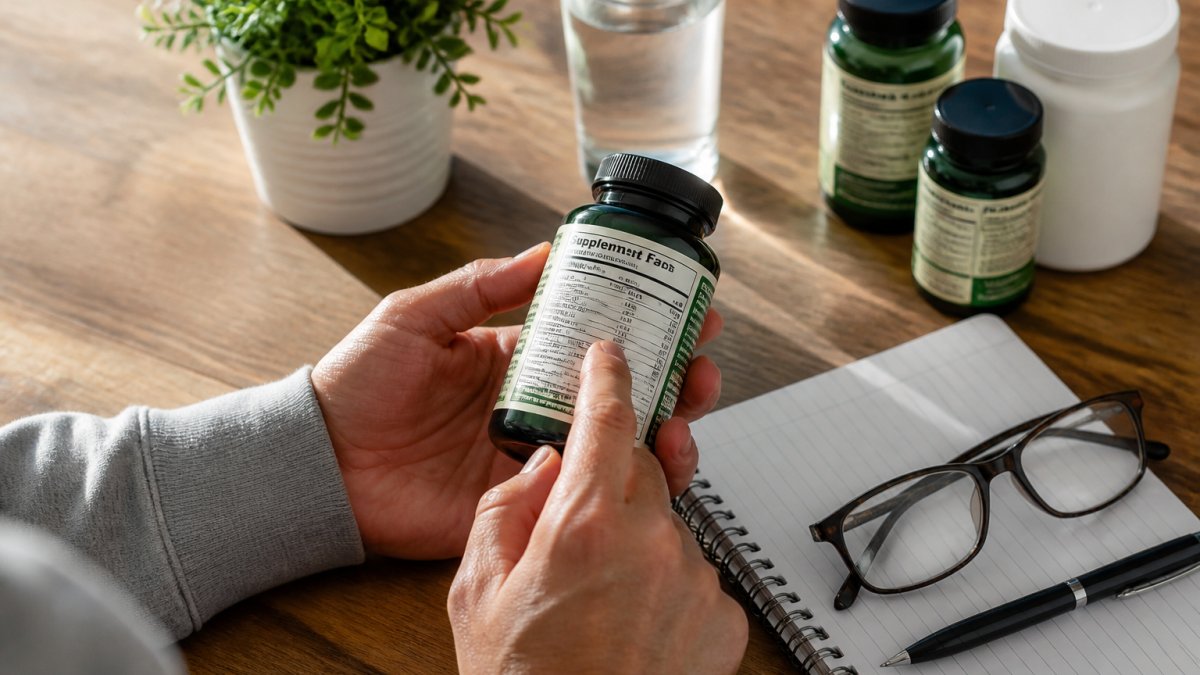
The label must list every ingredient and its amount in milligrams. A "proprietary blend" is a red flag, you don't know what's in there or in what amounts.
Check for these on the label:
- Full ingredient list with amounts
- Expiration date (not just "best by")
- Manufacturing date or batch number
- Country of origin
- Contact information for the company
Fillers and binders are common; some are harmless (cellulose, silicon dioxide), others matter more. If you have allergies, check for soy, shellfish, or tree nuts.
Dietary Supplement Safety and Interactions with Medications
Common supplement-medication interactions
St. John's Wort reduces effectiveness of birth control pills and many psychiatric medications.
Calcium supplements can interfere with absorption of antibiotics and thyroid medications; taking them at different times of day helps.
Magnesium can reduce absorption of certain antibiotics and bisphosphonates (bone medications); timing separation helps.
The general rule: tell your doctor about every supplement you take. Many people don't, which creates real safety risks.
Side effects and who should avoid certain supplements
High-dose vitamin A can cause liver problems and birth defects in pregnancy. Pregnant women need to be especially careful with supplement choices.
Excessive vitamin E increases bleeding risk. More is not better with fat-soluble vitamins.
Herbal supplements can cause allergic reactions; natural doesn't mean safe for everyone.
People with certain health conditions should avoid specific supplements. Those with kidney disease need careful monitoring of potassium and phosphorus supplements.
When Natural Supplements Make Sense for Your Health
Addressing specific nutrient deficiencies
Supplements make sense when blood tests show an actual deficiency.
Before starting any supplement for deficiency, get tested, knowing your baseline helps you measure whether it's working.
Some deficiencies are better addressed through food, leafy greens for folate, fatty fish for omega-3s. Supplements work when food sources aren't realistic.
Absorption problems matter: some people don't absorb certain nutrients well from food, and supplements can help.
Supporting immune health and circulation
Natural supplements can support immune function as part of a broader strategy.
For circulation, magnesium, omega-3s, and hawthorn have some research support, alongside lifestyle changes like exercise and reduced sodium, not instead of them.
The reality: supplements are one tool among many, additions to a foundation of healthy habits, not replacements for sleep, exercise, nutrition, and stress management.
Flu-Jack offers natural supplements specifically formulated to support immune function and healthy circulation.
FDA Regulation and What It Means for Supplement Safety
The FDA regulates dietary supplements differently than medications.
According to FDA guidance on dietary supplements, manufacturers must ensure their products are safe and labeled truthfully.
The Dietary Supplement Health and Education Act (DSHEA) established the current regulatory framework.
This regulatory difference matters.
Making informed choices about natural supplements requires understanding what research actually shows.
At Flu-Jack, we believe natural supplements should be trustworthy and transparent.
Frequently Asked Questions
Are natural supplements actually effective for immune support?
Effectiveness depends on the specific supplement and the individual. Some natural supplements like vitamin C and zinc have moderate evidence supporting their role in immune function, particularly when addressing deficiencies. However, 'natural' does not guarantee effectiveness. Clinical trials show mixed results for many popular immune supplements, and results vary based on dosage, duration of use, and individual health status. Consulting a healthcare professional about your specific needs is important before expecting significant results.
How can you tell whether a supplement is backed by scientific evidence?
Look for supplements supported by peer-reviewed clinical trials and systematic reviews published in reputable journals. Check if the manufacturer cites specific studies on their website or packaging. Third-party testing from organizations like NSF International or USP indicates quality control. Be cautious of vague claims like 'clinically proven' without specific citations. The FDA does not pre-approve supplements, so responsibility falls on manufacturers to ensure safety and accurate labeling. Ask your healthcare provider if evidence supports the supplement for your particular health goal.
Can natural supplements interact with prescription medications?
Yes, natural supplements can interact with prescription and over-the-counter medications, sometimes reducing medication effectiveness or increasing side effects. Common interactions occur with blood thinners, blood pressure medications, and certain psychiatric drugs. St. John's Wort, for example, can reduce the effectiveness of birth control and antidepressants. Always inform your doctor or pharmacist about all supplements you take, including herbal products and vitamins. They can review potential interactions and adjust your regimen if needed to ensure safety.
What makes one supplement brand more trustworthy than another?
Trustworthy brands provide transparent ingredient lists, disclose third-party testing results, and avoid exaggerated health claims. Look for certification from NSF International, USP, or ConsumerLab, which verify that products contain what the label states and are free from harmful contaminants. Check whether the company sources ingredients responsibly and maintains quality control standards. Reputable brands also provide clear contact information and customer support. Be skeptical of brands making absolute cure claims or offering prices significantly lower than competitors, which may indicate lower quality or ingredient substitution.