 how-to
How to Reduce Leg Swelling Naturally: 7 Proven Methods
Table of Contents
- Understanding Leg Swelling and When It Happens
- Leg Elevation for Swelling: The Foundation of Relief
- Compression Stockings and Garments for Swollen Legs
- Exercises for Swollen Legs and Gentle Movement
- Home Remedies for Leg Swelling That Actually Help
- When to See a Doctor for Leg Swelling
- Tracking Your Swelling and Prevention Tips
- Frequently Asked Questions
Last Updated: October 11, 2026
Understanding Leg Swelling and When It Happens
Leg swelling, or edema, happens when fluid builds up in your legs and feet. This causes puffiness and discomfort.
Swelling can happen for many reasons. Prolonged sitting or standing, salty foods, dehydration, hormonal changes, and certain medications all contribute.
The good news: most mild swelling responds well to simple home treatments.
However, some swelling signals a serious problem. We'll cover warning signs later.
Leg Elevation for Swelling: The Foundation of Relief
Raising your legs above heart level is the single most effective home remedy for swollen legs. Gravity does the work. Fluid drains from your legs back toward your heart instead of pooling in your feet and ankles.
This simple technique costs nothing and works fast. Many people notice improvement within 15-30 minutes.
Proper Elevation Technique
Elevation works best when your legs are truly above your heart. Resting your feet on a footstool isn't enough.
Here's how to do it right:
- Lie on your back on a bed or couch
- Place 2-3 pillows under your legs
- Raise your legs so your feet are 12 inches above heart level
- Keep your legs straight (don't bend at the knees)
The angle matters. Your legs must be higher than your heart for fluid to drain properly. A slight recline with legs elevated works better than sitting upright with feet on a table.
How Long to Elevate Your Legs
Start with 15 minutes, twice daily. Morning and evening work best. Many people do this while watching TV or reading.
If swelling is severe, elevate for 30 minutes, three times daily. Consistency matters more than duration.
At night, place pillows under your legs while sleeping. This overnight elevation often produces the biggest improvement. You'll notice less puffiness when you wake up.
Compression Stockings and Garments for Swollen Legs
Compression garments squeeze your legs gently. This pressure pushes fluid upward and prevents it from pooling in your feet and ankles. They're one of the most effective tools for reducing leg swelling naturally.
Compression works immediately. You feel the difference within minutes of putting them on. Your legs feel lighter and less achy.
Choosing the Right Compression Level
Compression strength is measured in millimeters of mercury (mmHg). Higher numbers mean more pressure.
Pick the right level for your needs:
- Mild compression (8-15 mmHg): Best for everyday swelling and prevention during travel or sitting
- Moderate compression (15-20 mmHg): For noticeable swelling that responds slowly to elevation alone
- Firm compression (20-30 mmHg): For significant swelling; may need a prescription
- Extra firm (30+ mmHg): Medical-grade; requires professional fitting
Start with mild compression if you've never worn them. Many people find this level comfortable enough for all-day wear. If swelling persists after two weeks, move to moderate compression.
Safe Use and Care Tips
Compression stockings last longer and work better when cared for properly.
Follow these guidelines:
- Wash by hand in lukewarm water with mild soap
- Air dry flat (never use a dryer)
- Replace every 3-6 months as elasticity weakens
- Put them on first thing in the morning before swelling develops
Don't wear compression stockings if you have poor circulation in your feet. If you have diabetes or nerve damage, talk to your doctor first. Compression can restrict blood flow to already-compromised areas.
Exercises for Swollen Legs and Gentle Movement
Movement is medicine for swollen legs. When you move, your muscles pump fluid upward against gravity. Sitting still all day makes swelling worse. Even light activity improves circulation and reduces ankle swelling.
The key is gentle, low-impact exercise. You don't need intense workouts. Consistent, easy movement works better than occasional hard efforts.
Low-Impact Activities That Work
These activities safely reduce leg swelling naturally without stressing your joints:
- Walking: 20-30 minutes daily at a comfortable pace. The calf muscle acts as a pump, pushing fluid upward.
- Swimming: Excellent for swollen legs. Water pressure helps drain fluid while the weightless environment protects your joints.
- Cycling: Stationary or outdoor. Smooth pedaling motions engage leg muscles without impact.
- Yoga: Gentle poses improve circulation. Poses with legs elevated work especially well.
Start with 15-20 minutes daily. Build up gradually. Consistency matters far more than intensity. A 20-minute daily walk beats a one-hour hike once a month.
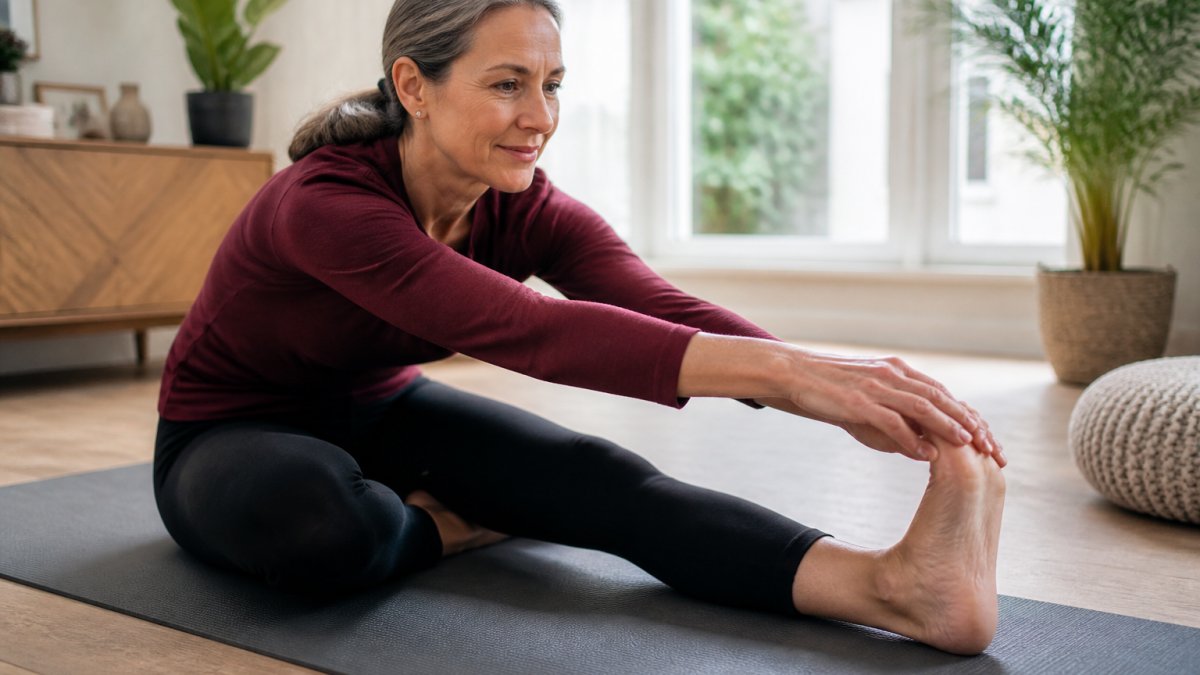
Simple Leg Stretches and Movements
These stretches take 5 minutes and reduce swelling when done twice daily.
Seated calf stretch:
- Sit in a chair with feet flat
- Straighten one leg in front of you
- Gently flex your foot toward your shin
- Hold for 15 seconds, repeat 3 times per leg
Ankle circles:
- Sit with one leg extended
- Slowly rotate your ankle in circles, 10 times each direction
- Repeat with the other leg
- Do this while sitting at your desk to prevent swelling during work
Leg lifts:
- Lie on your back
- Raise one leg straight up to about 45 degrees
- Hold for 5 seconds, lower slowly
- Repeat 10 times per leg
Standing calf raises:
- Stand facing a wall or counter
- Rise up on your toes, hold for 2 seconds
- Lower back down
- Repeat 15 times
These movements activate the muscle pump in your calves and thighs. This pumping action pushes fluid back toward your heart. Do them throughout the day, especially if you sit for long periods.
Home Remedies for Leg Swelling That Actually Help
Several home treatments reduce leg swelling naturally. Some have solid support. Others show promise but lack strong evidence. Here's what works and what to approach with caution.
Salt Baths and Cool Water Soaks
Soaking your feet in cool water temporarily reduces swelling. The cold constricts blood vessels and reduces inflammation.
How to do an Epsom salt soak:
- Fill a basin with cool (not cold) water
- Add 1-2 cups of Epsom salt
- Soak your feet for 15-20 minutes
- Repeat daily for best results
The relief is temporary. Swelling often returns within hours. Use soaks as a complement to elevation and exercise, not a replacement.
Important note on salt: While soaking in salt water may feel soothing, consuming too much salt makes swelling worse. See the next section on dietary adjustments.
Dietary Adjustments: Sodium and Hydration
What you eat directly affects how much fluid your body retains.
Reduce sodium intake:
- High salt makes your body hold onto water
- Aim for less than 2,300 mg of sodium daily (the CDC)
- Avoid processed foods, canned soups, and deli meats
- Cook at home more often to control salt
Many people see noticeable improvement in swelling within 3-5 days of reducing salt. Your body naturally releases excess fluid when sodium intake drops.
Drink more water:
- Dehydration makes swelling worse, not better
- Drink at least 8-10 glasses daily
- Water helps your kidneys flush excess sodium
- Herbal teas count (without added sugar or salt)
This seems backward, but it's true: drinking more water helps reduce swelling. Your body holds onto fluid when dehydrated. Adequate hydration signals your body that water is available, so it releases excess stores.
Potassium-rich foods help too:
- Bananas, sweet potatoes, spinach, and beans
- Potassium balances sodium levels
- Eat potassium-rich foods daily
Natural Ingredients With Limited Evidence
Several natural remedies are popular for swollen legs. The evidence supporting them is mixed or weak.
Ginger: Some people report reduced swelling with ginger tea or supplements. Scientific evidence is limited.
Turmeric: Contains curcumin, which has anti-inflammatory properties in laboratory studies.
Punarnava and Arjuna: Traditional Ayurvedic herbs claimed to support circulation. Western research is scarce.
These remedies are generally safe to try alongside proven methods.
When to See a Doctor for Leg Swelling
Most mild swelling responds to home treatment within 1-2 weeks. Some swelling signals a medical problem requiring professional care.
Warning Signs That Require Medical Attention
See a doctor if you experience:
- Swelling in only one leg (suggests blood clot or infection) (the CDC)
- Sudden onset of severe swelling
- Swelling accompanied by chest pain, shortness of breath, or coughing
- Skin that's red, warm, or painful to touch
- Swelling that doesn't improve after one week of home treatment
These symptoms may indicate deep vein thrombosis (blood clots), infection, kidney disease, heart problems, or liver disease. These require professional diagnosis and treatment.
Cause-Specific Limits of Self-Treatment
Home remedies work well for mild swelling from sitting, standing, or dietary factors. They don't work for swelling caused by underlying medical conditions.
When self-treatment likely won't help:
- Kidney disease (body can't regulate fluid balance)
- Heart failure (heart can't pump fluid effectively)
- Liver disease (affects protein levels that regulate fluid)
- Thyroid problems (affect metabolism and fluid retention)
- Venous insufficiency (valves in leg veins fail)
If swelling persists despite consistent home treatment for 2-3 weeks, or if it worsens, get evaluated. Your doctor can identify the underlying cause and recommend appropriate treatment.
Tracking Your Swelling and Prevention Tips
Monitoring your swelling helps you see what works and catch problems early.
Track these details daily:
- Time of day swelling is worst
- How tight your shoes feel
- Whether socks leave deep marks
- Any skin changes or color differences
- Which activities make swelling better or worse
Write this down for two weeks. Patterns emerge. You'll see which remedies help most. You'll notice if swelling is improving or worsening.
Prevention during travel and prolonged sitting:
- Stand and walk every hour during flights or long car rides
- Wear compression stockings while traveling
- Keep your legs elevated when possible
- Drink water, avoid alcohol and caffeine
- Do ankle circles and calf raises at your desk
Prevention is easier than treating swelling once it develops. Small daily habits prevent the problem from starting.
Supporting healthy circulation is part of overall wellness. Our all-natural supplements are designed to support healthy circulation as part of your daily wellness routine, working alongside these practical remedies to help you stay active and comfortable.
Leg swelling doesn't have to limit your activity or comfort.
Frequently Asked Questions
What household items can help reduce leg swelling?
Cool water soaks and Epsom salt baths are effective household remedies for leg swelling. Fill a basin with lukewarm water and soak your feet and ankles for 15-20 minutes. Epsom salt may help reduce swelling by drawing out excess fluid. Pillows are also essential for leg elevation, stack 2-3 pillows under your legs while resting to keep them above heart level. Compression stockings, though not household items, are affordable and widely available over-the-counter at pharmacies.
Can walking and movement really help reduce leg swelling?
Yes. Walking and gentle movement improve circulation and help your body process excess fluid more efficiently. Even 10-15 minutes of light walking several times daily can reduce swelling. Movement activates your calf muscles, which act as a pump to move fluid back toward your heart. Swimming and yoga are also excellent low-impact options. However, avoid strenuous exercise when swelling is acute, and always elevate your legs after activity.
How does reducing sodium intake help with leg swelling?
High sodium intake causes your body to retain fluid, worsening edema and swollen legs, feet, and ankles. Reducing salt intake helps restore fluid balance and allows your kidneys to process excess water more effectively. Aim to limit daily sodium to under 2,300 mg by avoiding processed foods, canned goods, and added salt. Increasing potassium-rich foods like bananas, spinach, and sweet potatoes can also help balance fluid levels and support healthy circulation.
When is leg swelling a sign I need to see a doctor?
Seek immediate medical attention if swelling is accompanied by chest pain, shortness of breath, or occurs suddenly in one leg only. See a doctor if swelling persists despite home treatment for more than a few days, is painful, warm to the touch, or accompanied by redness or skin changes. Chronic swelling can signal underlying circulatory, kidney, or heart issues that require professional diagnosis. A healthcare provider can identify the cause and recommend appropriate treatment beyond natural home remedies.