 how-to
Why Do I Have Cold Feet: Causes and Solutions
Table of Contents
- Understanding Why You Have Cold Feet
- Common Causes of Cold Feet
- Cold Feet and Poor Circulation: The Connection
- How to Warm Cold Feet: Practical Steps
- When to Worry About Cold Feet
- Supporting Circulation for Year-Round Comfort
- Frequently Asked Questions
Last Updated: October 5, 2026
Understanding Why You Have Cold Feet
Cold feet are common, especially in colder months or air-conditioned spaces, but understanding what cold feet causes can help you address persistent symptoms.
Cold feet often stem from circulation issues. Your feet are farthest from your heart, making them vulnerable to reduced blood flow.
Knowing what cold feet causes helps you find the right solution, some causes are simple to address, others require medical attention.
Common Causes of Cold Feet
Cold feet have many triggers. Sort yours into three buckets: everyday and situational causes, lifestyle and medication contributors, and medical conditions. Most people land in the first bucket.
Start With the Everyday and Situational Causes
These are the most common and least concerning. They tend to be symmetric, come and go with your environment or activity, and resolve within minutes of warming up.
- Cold exposure. Your body shunts blood away from your extremities toward your core to protect vital organs, a normal reflex, not a circulation disorder.
- Sitting still for long periods. Blood pools in your legs and returns to your heart more slowly.
- Constricting footwear or clothing. Tight socks, elastic bands, and narrow shoes can compress blood vessels near the surface.
- Air conditioning and cold floors. Indoor cooling and uninsulated floors pull heat from your feet even when outdoor temperatures are mild.
- Dehydration. Low fluids drop blood volume, and your body prioritizes the core.
The tell: both feet are affected equally, the coldness tracks with your environment or activity, and a few minutes of movement or warm socks fixes it.
Lifestyle and Medication Contributors
Some causes sit between everyday habits and medical conditions. They are worth ruling out before you assume something is wrong.
- Smoking and nicotine. Nicotine constricts blood vessels, strongest in the smallest vessels, fingers and toes.
- Inactivity. Cardiovascular fitness affects how efficiently blood reaches your extremities.
- Caffeine in large amounts. Caffeine can temporarily narrow blood vessels.
- Stress. Stress hormones trigger vasoconstriction, which is why anxious people often report cold hands and feet.
- Certain medications. Some blood pressure medicines, migraine drugs, and cold remedies containing pseudoephedrine can reduce peripheral blood flow. Never stop a prescribed medication on your own, talk to the prescriber first.
Medical Causes and the Clues That Point to Them
Medical causes tend to produce cold feet that are persistent, asymmetric, or accompanied by other symptoms.
Peripheral artery disease (PAD). Narrowed arteries reduce blood flow to the legs and feet.
Hypothyroidism. An underactive thyroid slows metabolism and heat production.
Anemia. Low red blood cells mean less oxygen delivered to tissues.
Raynaud's phenomenon. Blood vessels in the fingers and toes overreact to cold or stress and spasm.
Diabetes and peripheral neuropathy. Nerve damage can change how you perceive temperature.
Vitamin B12 deficiency. Low B12 can affect nerves and red blood cells.
A Quick Way to Sort Your Symptoms
Ask yourself three questions:
- Is it one foot or both? One-sided coldness is a stronger signal for a circulation problem and deserves medical evaluation.
- Does it come with pain, numbness, or color changes? Any of those moves you out of the everyday bucket.
- Does warming up fix it within about 15 minutes? If yes, an everyday cause is likely. If no, keep reading.
Environmental Factors and Cold Weather
Sometimes the answer is simple: it is cold. Cold temperatures reduce blood flow to your extremities as your body pulls blood inward to protect your core.
Environmental factors go beyond outdoor temperature:
- Cold air conditioning in offices and homes
- Wet conditions that lower skin temperature
- Dry air that affects skin sensitivity
- Sudden temperature changes
Protection is straightforward: warm socks, proper footwear, and layers. For people with reduced circulation, these steps matter even more.
Cold Feet and Poor Circulation: The Connection
The relationship between cold feet and poor circulation is fundamental. Blood carries warmth. When circulation slows, warmth doesn't reach your feet efficiently.
Poor circulation develops gradually. Early signs include cold feet and hands; later, numbness, tingling, or skin color changes, with feet appearing pale or bluish.
Peripheral artery disease narrows blood vessels in your extremities.
The key difference: temporary cold feet warm up quickly when you move, while persistent cold feet that don't respond to warming suggest a deeper issue.
How to Warm Cold Feet: Practical Steps
Warming cold feet involves immediate actions and long-term habits.
Immediate Warming Techniques
Start with these quick fixes:
- Move around. Walking increases circulation immediately; even gentle movement helps blood reach your feet.
- Wear warm socks. Thick, insulating socks trap heat. Wool works better than cotton.
- Use a blanket. Wrapping your feet retains body heat.
- Soak in warm water. A warm (not hot) foot bath increases blood flow. Limit to 10-15 minutes.
- Massage your feet. Rubbing stimulates circulation.
- Drink warm beverages. Hot tea or broth warms you from inside.
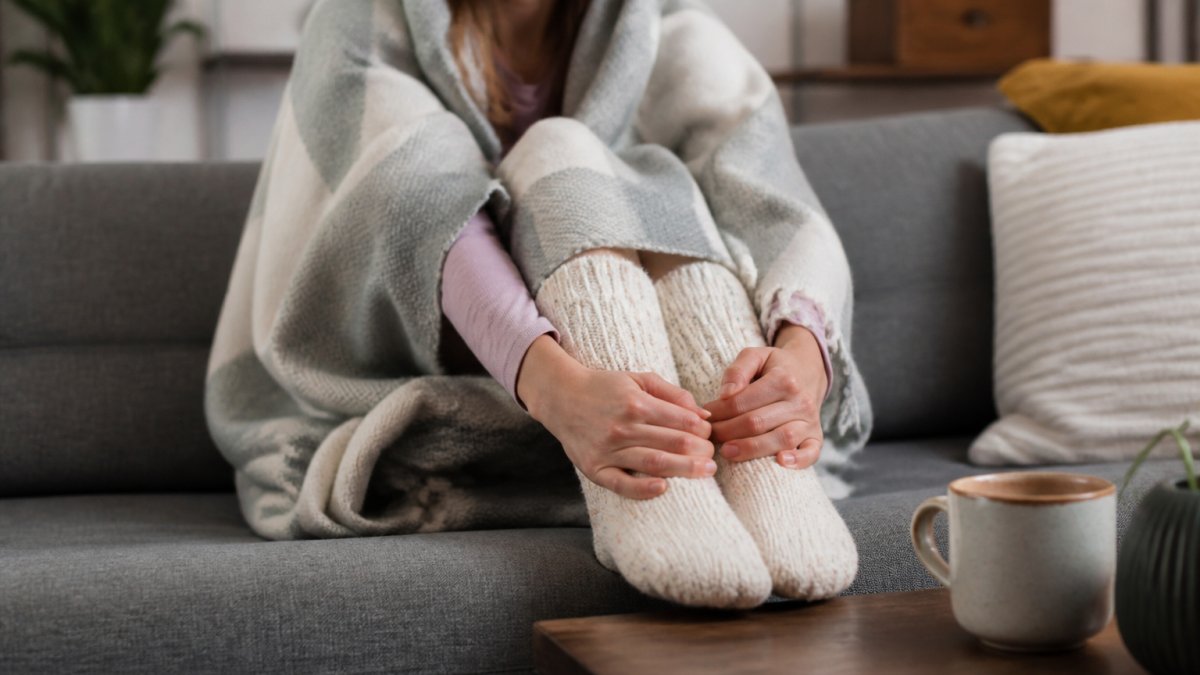
Avoid extreme heat: very hot water damages skin, especially with reduced sensation, and never use heating pads directly on numb feet.
Long-Term Lifestyle Changes
Persistent cold feet need sustained solutions:
- Exercise regularly. Cardiovascular activity strengthens your heart and improves circulation. Aim for 30 minutes most days (the CDC).
- Stay hydrated. Drink enough water to keep blood flowing smoothly.
- Manage stress. Stress narrows blood vessels. Meditation, yoga, or deep breathing help.
- Eat iron-rich foods. Support healthy red blood cells with spinach, beans, lean meat, or fortified grains.
- Avoid smoking. Smoking constricts blood vessels and worsens circulation.
- Limit caffeine. Excessive caffeine can narrow blood vessels temporarily.
- Keep moving. Avoid sitting for hours. Stand and stretch every hour.
Supporting healthy circulation year-round prevents cold feet from becoming chronic. We recommend pairing lifestyle changes with natural supplements formulated to support healthy circulation.
When to Worry About Cold Feet
Not all cold feet signal danger, but the response differs by symptom. Sort your situation into one of three lanes: seek emergency care now, book a routine appointment, or manage at home and monitor.
Lane 1: Seek Emergency Care Now
Go to an emergency department or call 911 if you have any of the following. These can indicate an acute arterial blockage or another time-sensitive problem.
- Sudden coldness in one foot that appeared within minutes to hours, especially if painful.
- A foot that is pale, white, or blue and does not pink up when you press the skin.
- Severe pain in the foot or leg out of proportion to what you would expect.
- Loss of sensation or movement in the foot or lower leg.
- A foot that feels cold and looks discolored after an injury, a procedure, or in someone with known vascular disease.
These signs suggest blood flow to the foot may be blocked. Time matters, the longer tissue goes without blood, the greater the risk of permanent damage.
Lane 2: Book a Routine Appointment
These situations are not emergencies, but are reasons to schedule a visit with a primary care clinician or a vascular specialist.
- Cold feet that persist for more than two weeks despite warming efforts.
- One foot consistently colder than the other over days or weeks.
- Cold feet with numbness, tingling, or burning.
- Cold feet with cramping in the calves or thighs when walking that eases with rest.
- Cold feet with fatigue, weight gain, or feeling cold all over, which can point to thyroid problems.
- Cold feet with shortness of breath or unusual paleness, which can point to anemia.
- Sores, cuts, or blisters on the feet that are slow to heal.
- A history of diabetes, smoking, or known heart or vascular disease combined with new or worsening cold feet.
Lane 3: Manage at Home and Monitor
If your cold feet are symmetric, come and go with weather or activity, and warm up within about 15 minutes of moving or adding socks, home care is reasonable. Watch for any Lane 1 or Lane 2 signs.
What a Clinician Will Actually Check
Knowing what to expect removes some uncertainty. A typical evaluation for persistent cold feet includes:
History. Your clinician will ask when the coldness started, whether it affects one foot or both, what makes it better or worse, whether you smoke, your medications, and whether you have diabetes, heart disease, or a family history of circulation problems.
Ankle-brachial index (ABI). A simple, non-invasive test comparing blood pressure at your ankle to your arm. A lower ratio suggests narrowed arteries in the legs.
Blood tests. A complete blood count checks for anemia. Thyroid-stimulating hormone (TSH) checks thyroid function. Vitamin B12 and other nutrient levels may be checked if a deficiency is suspected.
Additional imaging or referral. If the exam or ABI suggests vascular disease, your clinician may refer you to a vascular specialist for ultrasound or other imaging.
Cold Feet at Night and Persistent Symptoms
Two patterns come up often and are worth addressing directly.
Cold feet at night. If your feet are cold mainly in bed, the cause is often positional or environmental rather than medical. Blood flow slows when you are still, and a cool bedroom or light bedding can leave your feet exposed.
Recurring symptoms. Cold feet that come back in the same pattern, same time of day, same foot, same triggers, are easier for a clinician to work with than symptoms that seem random. Note the pattern before your visit.
Supporting Circulation for Year-Round Comfort
Healthy circulation is about more than avoiding cold feet. It's about maintaining the energy and comfort needed for an active life.
Your circulatory system works constantly. Supporting it requires consistent effort. Regular movement, proper nutrition, and stress management all contribute.
Our all-natural supplement formula is designed for people focused on maintaining circulatory health.
The most effective strategy combines multiple approaches: move more, stay hydrated, manage stress, eat well, and support your body with trusted supplements.
Cold feet often signal that your body needs better circulation support. Understanding the cause, whether environmental, lifestyle-related, or medical, guides your response.
Frequently Asked Questions
Why is my body warm but my feet are cold?
Your body prioritizes keeping your core warm during temperature drops, which reduces blood flow to your extremities. When circulation is compromised or your body perceives a threat, blood vessels in your feet constrict, diverting warmth to vital organs. This is especially common if you have poor circulation, anemia, or thyroid dysfunction. Cold feet can also result from reduced oxygen delivery to peripheral tissues, even when your overall body temperature feels normal.
Can poor circulation cause cold feet?
Yes. Poor circulation is one of the most common causes of cold feet. When blood vessels narrow or blood flow slows, less warm blood reaches your feet, causing them to feel cold to the touch. Peripheral artery disease, a condition where arteries narrow due to plaque buildup, is a serious circulatory issue that can lead to persistently cold feet. Maintaining healthy blood circulation through movement, proper nutrition, and natural supplements designed to support cardiovascular function can help address this root cause.
Can cold feet be a sign of a thyroid problem?
Cold feet can indicate thyroid dysfunction, particularly hypothyroidism, where the thyroid doesn't produce enough hormones to regulate body temperature and metabolism. A sluggish thyroid slows your metabolic rate, reducing heat production and affecting blood circulation to extremities. If you experience cold feet alongside fatigue, weight gain, or dry skin, consult a healthcare provider for thyroid testing. Managing thyroid health through proper nutrition and medical guidance can help restore normal temperature regulation.
When should I seek medical care for cold feet?
Seek medical attention if cold feet are accompanied by numbness, tingling, pain, skin color changes (pale or bluish skin), swelling, or sores that don't heal. These symptoms may indicate peripheral artery disease, nerve damage, or other serious conditions. Also see a doctor if cold feet persist despite warming measures, develop suddenly without an obvious cause, or affect only one foot. A healthcare provider can assess your circulation, check for anemia or thyroid issues, and recommend appropriate treatment.