 ultimate-guide
Natural Supplements for Cold Hands: What Works
Table of Contents
- Why Your Hands Stay Cold: Causes and Warning Signs
- Vitamins for Poor Circulation: The Deficiencies That Matter
- Natural Supplements for Cold Hands: What the Evidence Shows
- How to Improve Circulation Naturally: Lifestyle Changes That Work
- Dosage, Bioavailability, and Drug Interactions: What Competitors Skip
- Raynaud's Phenomenon and Cold Hypersensitivity: Special Considerations
- Conclusion: Building a Plan That Fits Your Circulation Needs
- Frequently Asked Questions
Last Updated: September 17, 2026
Why Your Hands Stay Cold: Causes and Warning Signs
Cold hands are usually a normal response to low temperatures, but persistent coldness can point to circulation, thyroid, or nutrient issues worth investigating. This guide from Flu-Jack covers what natural supplements for cold hands can realistically do, and where they fall short.
When you step into a cold room, blood vessels near your skin narrow to protect your core temperature. That process, called vasoconstriction, is healthy and temporary. What matters is whether your hands warm back up once you're comfortable again.
Cold Weather vs. Chronic Circulation Problems
Cold-weather chill is situational: your hands go cold outdoors and recover indoors. Chronic circulation problems work differently. Hands stay cold in a warm room, often alongside numbness and tingling, pale or bluish fingertips, or a heavy, tired feeling in the arms. If that pattern sounds familiar, the cause is internal, not environmental.
When Cold Hands Signal Something More
A common mistake is assuming cold hands are always harmless. They usually are, but certain signs deserve a doctor's attention:
- Cold hands on one side of the body only
- Fingertips that turn white, blue, then red
- Sores or slow-healing wounds on the fingers
- Coldness paired with fatigue, hair thinning, or unexplained weight change
Those patterns can point to thyroid dysfunction, anemia, or a vascular condition.
Vitamins for Poor Circulation: The Deficiencies That Matter
Nutrient deficiencies are one of the more fixable causes of cold extremities. The vitamins for poor circulation that come up most often in clinical practice are iron, vitamin B12, and magnesium, each tied to a different part of the blood-flow equation.
Iron, B12, and the Anemia Connection
If you eat a plant-based diet, have heavy menstrual cycles, or take acid-reducing medication long term, your risk of deficiency climbs. Testing matters here. A common mistake is self-prescribing iron based on symptoms alone, since excess iron is harmful. Ask your doctor for a complete blood count and ferritin panel before supplementing.
Magnesium and Niacin: Vasodilation Support
Magnesium supports endothelial function, the way your blood vessel lining regulates dilation and blood pressure. Niacin, a B vitamin, triggers a temporary "flush": warmth and redness as capillaries widen. That flush is not the same as lasting improvement, but it does illustrate how vasodilation feels. Both nutrients work best when dietary intake is already reasonable.
Natural Supplements for Cold Hands: What the Evidence Shows
Natural supplements for cold hands work through three broad mechanisms: vasodilation (widening blood vessels), microcirculation support (improving flow through the smallest capillaries), and thermogenesis (generating heat). None of them "thin" blood in the way a prescription anticoagulant does, and none of them correct an underlying thyroid, autoimmune, or structural vascular problem. What they can do is support the peripheral end of a system that daily habits and medical treatment either help or undermine.
Ginkgo Biloba: The Most Studied Option for Microcirculation
Ginkgo biloba extract is the most researched herbal option for peripheral circulation. Its active constituents are terpene lactones (ginkgolides and bilobalide) and flavonoid glycosides, which are thought to support endothelial function, reduce platelet aggregation, and improve red blood cell deformability, the flexibility that lets red blood cells squeeze through narrow capillaries. Standardized extracts are typically concentrated to 24 percent flavonoid glycosides and 6 percent terpene lactones, which is the form used in most clinical research.
Horse Chestnut: Vein Support, Not Hand Warmth
Horse chestnut seed extract is standardized to escin (also spelled aescin), a mixture of saponins that supports venous tone and reduces capillary leakage. It is best known for chronic venous insufficiency, the leg heaviness, swelling, and aching that come from blood pooling in the lower body. That is a vein problem in the legs, not a capillary problem in the fingers.
Cayenne and Ginger: Thermogenesis and Warming
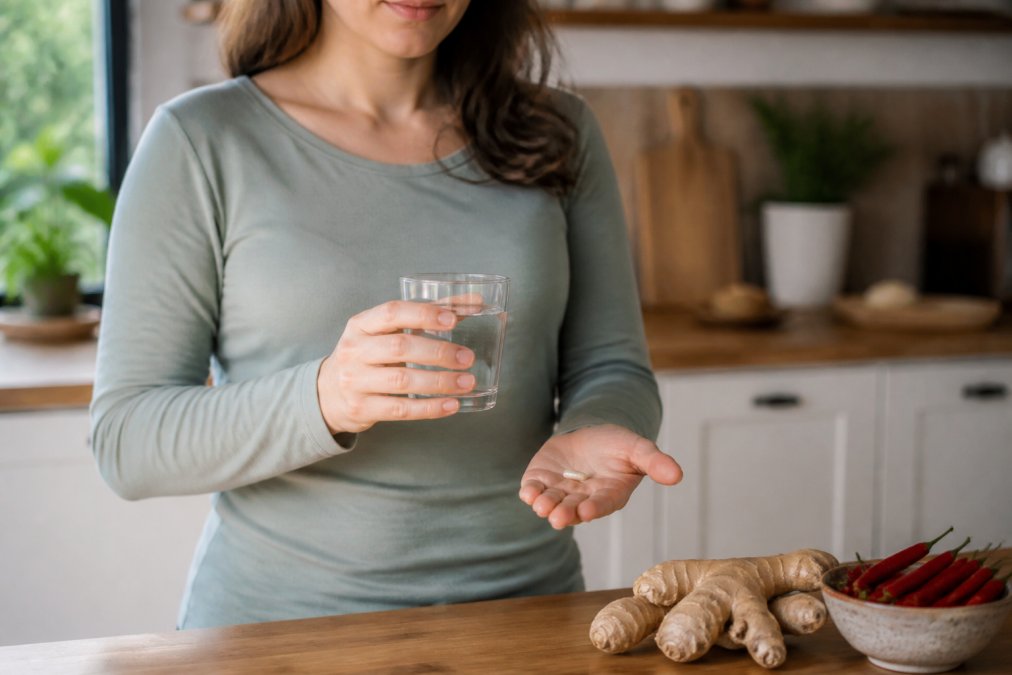
Cayenne pepper contains capsaicin, the compound that triggers TRPV1 receptors in the skin and produces a warming, sometimes burning sensation. That warmth is real but topical and temporary; it does not raise core temperature or fix a vascular cause. Ginger root contains gingerols and shogaols, which have a milder warming effect and are generally gentler on the stomach.
What the Evidence Actually Supports
A useful way to sort these four:
- Ginkgo biloba, best-studied for microcirculation; effects build slowly; real bleeding risk.
- Horse chestnut, good evidence for leg vein symptoms; weak rationale for hand warmth.
- Cayenne, topical warming; no meaningful evidence for chronic cold hands.
- Ginger, mild warming and digestive comfort; not a circulation treatment.
If you have Raynaud's phenomenon or a diagnosed vascular condition, none of these replace medical treatment. Treat them as supportive additions you discuss with a pharmacist, especially if you take any medication that affects clotting or blood pressure.
How to Improve Circulation Naturally: Lifestyle Changes That Work
Learning how to improve circulation naturally starts with movement, warmth, and hydration, not pills. Supplements support a system that daily habits either help or undermine.
- Move every 30 to 45 minutes: walk, stretch, or flex your fingers
- Keep hands warm with gloves rather than relying on hot water
- Stay hydrated; blood viscosity rises when you're dehydrated
- Limit smoking and excess caffeine, both of which constrict vessels
- Eat iron-rich and magnesium-rich foods consistently
Dosage, Bioavailability, and Drug Interactions: What Competitors Skip
Most guides skip the questions that actually decide whether a supplement helps: how much, in what form, and what it clashes with. Bioavailability, or how much of a nutrient your body actually absorbs, varies enormously between forms.
| Nutrient | Watch For | Practical Note |
|---|---|---|
| Iron | Constipation, overdose risk | Test first; take with vitamin C |
| Vitamin B12 | Generally well tolerated | Sublingual forms help absorption |
| Magnesium | Loose stools at high doses | Glycinate and citrate absorb best |
| Ginkgo biloba | Bleeding risk | Avoid with blood thinners |
| Cayenne | Stomach irritation | Start with small amounts |
Raynaud's Phenomenon and Cold Hypersensitivity: Special Considerations
Raynaud's phenomenon is a condition in which cold or emotional stress triggers exaggerated vasoconstriction in the fingers and toes. The classic color sequence is white (vasospasm, blood flow cut off), then blue (deoxygenation), then red (reperfusion as blood returns). It affects roughly 5 to 10 percent of people and is far more common in women.
Primary vs. Secondary: Why the Distinction Changes Everything
Primary Raynaud's (sometimes called Raynaud's disease) has no underlying cause. It typically starts before age 30, is symmetric across both hands, is annoying but not dangerous, and does not progress to tissue damage. Secondary Raynaud's (Raynaud's syndrome) is driven by another condition, scleroderma, lupus, rheumatoid arthritis, or a vascular disorder. It tends to start later, can be asymmetric, and carries a risk of skin ulcers and tissue damage.
Common Triggers You Can Control
Most Raynaud's attacks are triggered by a short list of predictable inputs:
- Cold exposure, including reaching into a freezer or holding a cold drink
- Emotional stress and anxiety
- Vibration from tools or machinery
- Smoking and nicotine, which constrict vessels
- Caffeine in large amounts
- Certain medications, including some beta-blockers and migraine drugs
Cold Hypersensitivity Without Color Changes
Cold hands without the white-blue-red sequence are a different picture. This pattern often tracks with anemia, hypothyroidism, low body fat, or simply poor cold acclimation. It can also reflect low blood pressure or a sedentary routine that leaves peripheral circulation under-stimulated. Match the solution to the cause: a ferritin and thyroid panel for the deficiency side, and consistent movement and warmth for the acclimation side.
Where Supplements Fit, and Where They Do Not
For people with Raynaud's, supplements are supportive, not curative. Warming strategies, stress management, and trigger avoidance do more than any single capsule. Ginkgo and magnesium are sometimes discussed for vasodilation support, but neither replaces a prescribed calcium channel blocker such as nifedipine, which is the most common first-line medication for moderate to severe Raynaud's.
Conclusion: Building a Plan That Fits Your Circulation Needs
The challenge with cold hands is that the fix depends entirely on the cause: a deficiency, a vascular condition, or simple cold exposure. Start with testing and daily habits, then layer in targeted support.
Frequently Asked Questions
What vitamin deficiency causes cold hands and feet?
Iron deficiency anemia is the most common cause, reducing oxygen delivery to extremities. Vitamin B12 deficiency also impairs nerve function and can cause numbness and tingling alongside cold hands. Low magnesium may affect vasodilation. A blood test can confirm deficiencies before you start supplements for cold hands.
Are there natural supplements that improve blood circulation?
Yes. Ginkgo biloba extract, horse chestnut, cayenne pepper, and ginger root are among the natural supplements studied for peripheral circulation. Magnesium supplementation and niacin (which causes a flush) also support vasodilation. Results vary, and bioavailability matters, so choose products with third-party testing and take them consistently for several weeks.
Can magnesium help with cold extremities?
Magnesium supports vasodilation and healthy blood pressure, which can improve blood flow to hands and feet. Some people notice warmer extremities after consistent magnesium supplementation, especially if they were deficient. It is not a quick fix for Raynaud's disease, but it can be part of a broader plan to improve circulation naturally.
When should I see a doctor for cold hands?
See a doctor if cold hands are persistent, painful, change color (white, blue, then red), or come with numbness and tingling. These can signal Raynaud's phenomenon, thyroid issues, or iron deficiency anemia. A doctor can check for underlying conditions and review any supplements for interactions with medications.