 listicle
Best Herbal Teas for Flu Relief: A Symptom-by-Symptom Guide
Last Updated: November 9, 2026
Quick Summary
The best herbal teas for flu are matched to your worst symptom: slippery elm, marshmallow root, or licorice for a raw sore throat, ginger for sore throat and body aches, peppermint for cough and congestion, and elderberry or echinacea at the first sign of illness. Most herbal teas are fine at two to four cups daily for short periods during an illness. Check with a pharmacist first if you take prescription medication, since licorice root, echinacea, and chamomile can interact with some drugs.
- Steep a slice of fresh ginger five to ten minutes, adding honey and lemon once the water cools slightly.
- Echinacea is generally taken in short bursts at the onset of illness rather than every day year-round.
- Licorice root can raise blood pressure and cause potassium loss in large amounts or over long periods.
- For a dry, tickly cough, reach for a coating herb like slippery elm or a calming cup of chamomile.
- Peppermint relaxes the valve at the top of the stomach, which can trigger heartburn in people with reflux.
Table of Contents
- How to Match the Best Herbal Teas for Flu to Your Worst Symptom
- Ginger Tea: Warming Relief for Sore Throat and Body Aches
- Peppermint Tea for Cough Suppression and Nasal Congestion
- Elderberry and Echinacea: Immune Support at the First Sign of Illness
- Choosing an Herbal Tea for Cough and Cold That Coats the Throat
- Tea for Sore Throat and Cough: Chamomile, Slippery Elm, and Licorice
- Tea for Cough and Phlegm: Expectorant Herbs That Loosen Mucus
- Herbal Tea Safety and Medication Interactions You Should Know
- Frequently Asked Questions
How to Match the Best Herbal Teas for Flu to Your Worst Symptom
The best herbal teas for flu symptom relief are the ones matched to what is actually bothering you most. Many people find that matching the herb to the symptom makes a mug of tea more comforting.
Below, we break down which herbs are commonly associated with which symptoms, how much to drink, and where the safety lines are.
What the Research Says vs. What Tradition Claims
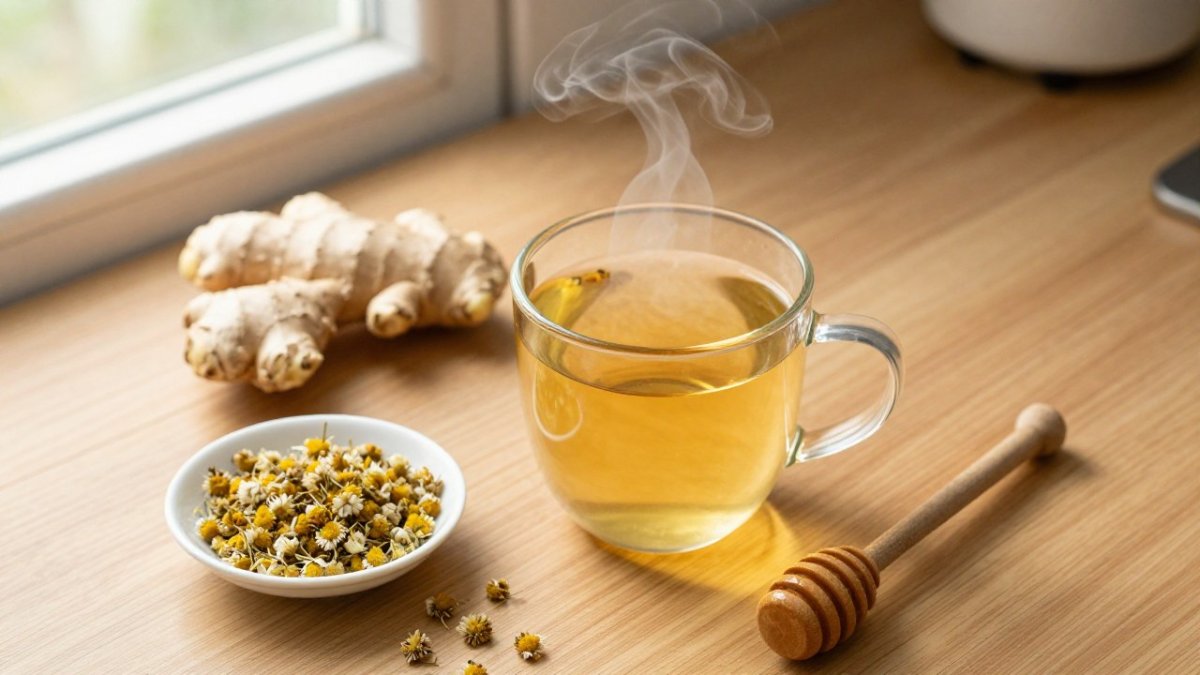
Tradition gives centuries of use for ginger, chamomile, peppermint, elderberry, and echinacea. Modern research has studied some of these herbs, but the evidence is mixed and often preliminary.
Herbal tea is a hot water infusion of plant material, usually leaves, flowers, roots, or bark, consumed for flavor and traditional therapeutic effect.
If you want to go deeper on which plants actually support immunity, our guide on what natural herbs boost the immune system covers the practical side of choosing and using them.
The Symptom-to-Tea Matrix
Use this as a starting point, then adjust for taste and tolerance.
- Sore, raw throat that hurts to swallow: slippery elm, marshmallow root, or licorice, which are mucilage herbs that leave a coating film.
How Many Cups, and How Strong
Herbal tea dosing varies by herb. A few specifics to keep in mind:
If you are pregnant, breastfeeding, giving tea to a young child, or managing a chronic condition, check with a pharmacist or clinician first.
Ginger Tea: Warming Relief for Sore Throat and Body Aches
Ginger is a popular choice for flu-season tea. A common approach is a slice of fresh root steeped five to ten minutes, with honey and lemon added once the water has cooled slightly.
Watch out: ginger can cause mild heartburn in people prone to reflux, so keep the cup small if that is you.
Peppermint Tea for Cough Suppression and Nasal Congestion
The catch: peppermint relaxes the valve at the top of the stomach, which can trigger heartburn. If you have acid reflux, use it sparingly or skip it.
Elderberry and Echinacea: Immune Support at the First Sign of Illness
Echinacea is generally taken in short bursts at the onset of illness rather than every day year-round. If you want a step-by-step approach, our article on how to use herbs to support your immune system walks through it.
For daily support, Flu-Jack is an all-natural supplement designed to support immune system function and healthy circulation as part of a daily wellness routine.
Choosing an Herbal Tea for Cough and Cold That Coats the Throat
A coating tea will feel slightly thicker on the tongue than a standard brew, and that is the point. Steep longer than a normal tea bag to pull more of that gel into the water.
Tea for Sore Throat and Cough: Chamomile, Slippery Elm, and Licorice
Watch out: licorice root can raise blood pressure and cause potassium loss when used in large amounts or over long periods (Licorice-induced apparent mineralocorticoid excess causing persistent hypertension and...). If you have high blood pressure or take diuretics, choose a licorice-free blend. Anyone worried about combining herbs with prescriptions should read can you take immune supplements with medication before making tea a daily habit.
Tea for Cough and Phlegm: Expectorant Herbs That Loosen Mucus
If you would rather not lean on over-the-counter options at all, our guide to natural alternatives to over-the-counter flu meds covers the wider toolbox.
Herbal Tea Safety and Medication Interactions You Should Know
Herbal tea is not automatically risk-free just because it is natural. Plants contain active compounds that can interact with some prescription and over-the-counter medicines.
The main culprits in a flu-tea lineup are licorice root, echinacea, chamomile, and peppermint. Here is what each one does and why it matters if you are also taking something for the flu.
Licorice Root
Licorice contains glycyrrhizin, which can cause the body to hold sodium and lose potassium. In large amounts or over long periods, that can raise blood pressure and cause fluid retention. If you take a diuretic, blood pressure medication, or heart medication, skip licorice or keep it to rare cups.
Echinacea
Echinacea may interact with immunosuppressant medications. Check with a pharmacist before combining it with other immune-stimulating supplements or prescription medicines.
Chamomile
Chamomile may interact with some medications, so mention regular use to your pharmacist.
Peppermint and Ginger
These two are gentler, but both can relax the valve at the top of the stomach and worsen acid reflux. If you take a proton pump inhibitor or an antacid, peppermint and ginger are not dangerous, but they may undercut the comfort you are trying to create.
Decongestants and Cold Medicines
A few practical rules keep it simple:
- Tell your pharmacist which herbs you are drinking, especially if you take blood pressure, heart, or blood-thinning medication
- Tell your pharmacist which herbs you are drinking, especially if you take blood pressure, heart, or blood-thinning medication
- Check with a doctor before giving herbal tea to young children or to older adults with chronic conditions
- Do not assume a tea blend is interaction-free just because the label says natural
The National Center for Complementary and Integrative Health publishes plain-language summaries of herb safety that are worth a look before you stock the cupboard. For general food and drug safety guidance, the U.S. Food and Drug Administration is the reference point.
If you take a prescription medication, ask your pharmacist or doctor before making any herbal tea a daily habit.
Here is a quick look at the main culprits in a flu-tea lineup and why each one matters if you are also taking something for the flu.
| Herb | What it does | Who should be careful |
|---|---|---|
| Licorice root | Contains glycyrrhizin; can hold sodium and lose potassium | Diuretics, blood pressure or heart medication |
| Echinacea | May interact with immunosuppressant medications | Immunosuppressants, other immune-stimulating supplements |
| Chamomile | May interact with some medications | Mention regular use to your pharmacist |
| Peppermint and ginger | Can relax stomach valve and worsen acid reflux | Proton pump inhibitors or antacids |
Frequently Asked Questions
What herbal tea is best for flu symptoms?
There is no single best option because flu symptoms vary. Ginger, peppermint, chamomile, elderberry, and echinacea are among the herbs commonly used in flu-season teas. Choose a blend that suits your preferences and check with a pharmacist if you take medication.
How often can you drink herbal tea when you have the flu?
If you take prescription medication or manage a chronic condition, check with a pharmacist before drinking herbal tea regularly.
Is green tea good for a cold and cough?
Green tea contains caffeine, so you may want to limit intake in the evening.
What tea is good for cough and phlegm?
Seek medical care if phlegm is bloody or breathing becomes difficult.
When should you seek medical care for flu symptoms?
Contact a healthcare provider if you have trouble breathing, chest pain, persistent high fever, severe weakness, or symptoms that improve then return worse. People at higher risk, including older adults, pregnant women, and those with chronic conditions, should call early about antiviral treatment. Herbal teas are not a substitute for medical care, vaccination, or prescribed medication.