 how-to
How to Do Contrast Showers for Better Circulation
Quick Summary
Contrast showers alternate warm and cold water, which may produce short-term changes in blood flow as vessels widen and narrow. The evidence is limited, though, and most studies used baths rather than showers, so a lasting improvement in circulation is not established.
- Warm water widens blood vessels, while cold water narrows them, which may help move blood.
- Most circulation research on contrast therapy used baths or immersion, not showers.
- A typical starter routine is 1 to 3 minutes warm and 15 to 30 seconds cold, repeated 3 to 5 rounds.
- Always finish on cold, since the cold phase drives the alert, refreshed feeling.
- Anyone with heart disease, blood clots, Raynaud's, or one-sided leg swelling should see a doctor first.
Table of Contents
- What Contrast Showers Are and How Alternating Temperatures Affect Blood Vessels
- Benefits of Contrast Showers for Circulation: What the Evidence Shows
- Contrast Shower Technique: Temperatures, Intervals and Sequence
- How Long to Do Contrast Showers for Best Results
- Contrast Shower Side Effects and When to Stop
- Who Should Avoid Contrast Showers and When to Ask a Doctor
- Contrast Therapy for Circulation: Setting Realistic Expectations and Your Next Step
- Frequently Asked Questions
What Contrast Showers Are and How Alternating Temperatures Affect Blood Vessels
Last Updated: November 4, 2026
Contrast showers alternate between warm and cold water, usually in short rounds. Readers often ask whether this simple habit can help circulation, and the honest answer is: it may help short-term blood flow, but the evidence is more limited than popular articles suggest.
Contrast hydrotherapy, also called contrast water therapy, is the practice of switching between hot and cold water. A contrast shower applies that same idea at home, using only the shower you already have.
Here is the basic mechanism. Warm water tends to widen blood vessels, a process called vasodilation. Cold water tends to narrow them, called vasoconstriction. Switching back and forth may cause the vessels to open and close, which some researchers believe helps move blood through the tissues.
- Warm water: vessels widen, blood flow in the skin and muscles increases
- Cold water: vessels narrow, blood is pushed toward the body's core
- Repeated switching: may create a pumping effect in the circulatory system
Most of the research on this topic uses full baths or immersion in cold and warm water, not showers. That matters. Shower water usually does not cover the body the same way, so results from a bath should not be assumed for a shower.
Benefits of Contrast Showers for Circulation: What the Evidence Shows
Most of what people believe about contrast showers for circulation comes from research on contrast baths, contrast immersion, or cold-water immersion, not showers. That distinction is the single most important thing to understand before evaluating any benefit claim, because a shower wets the body unevenly, runs at lower pressure than a bath, and rarely submerges the limbs.
With that caveat in place, here is what the evidence actually supports, sorted by how strong the case is.
Short-term blood flow changes, plausible, modest, and temporary. Alternating warm and cold water does produce measurable changes in skin blood flow and vessel diameter during and shortly after exposure. Warm water drives vasodilation and increases cutaneous blood flow; cold water drives vasoconstriction and shifts blood toward the core. The repeated cycle is sometimes described as a vascular pump.
Muscle recovery and delayed-onset muscle soreness (DOMS), mixed, and mostly studied with baths. Contrast water therapy has been studied as a post-exercise recovery tool, with some trials reporting reduced perceived soreness and better recovery of strength and power after strenuous exercise.
Swelling and perceived heaviness, subjective relief is not the same as reduced edema. People frequently report that their legs feel lighter after a contrast shower. That is a real sensation, but it is not the same as a measured reduction in limb volume or edema. Research on contrast therapy and swelling is limited and largely comes from immersion protocols.
Tissue oxygenation and healing, largely extrapolated. Some contrast-therapy literature discusses improved tissue oxygenation and faster healing after injury, but the evidence is thin and almost entirely from bath or immersion settings. Applying that claim to showers is an extrapolation, not a finding.
Alertness and mood, the most reliable effect. The cold phase produces a strong sympathetic response: heart rate and blood pressure rise briefly, breathing deepens, and most people report feeling more awake. This is the benefit with the least disagreement and the least need for research.
Immune-system effects, not established. Claims that contrast showers strengthen immunity are not supported by strong evidence in shower form. Some cold-exposure research has looked at immune markers, but the results are preliminary and do not justify a shower-based immunity claim.
A useful way to read the literature is to separate four variables that competitors often blur together: the method (shower vs. bath vs. plunge), the temperature of each phase, the duration of each exposure, and the body area exposed. When you see a positive result, check those four details before assuming it applies to your bathroom routine.
Watch out: do not treat a contrast shower as a treatment for a diagnosed circulation disorder such as peripheral artery disease or chronic venous insufficiency. Those conditions need medical management, and a shower routine is not a substitute.
The table below sums up what the evidence supports, sorted by how strong the case is.
| Benefit | Evidence strength | Note |
|---|---|---|
| Short-term blood flow changes | Plausible, modest | Temporary, during or shortly after exposure |
| Muscle recovery and soreness | Mixed | Mostly studied with baths, not showers |
| Swelling and heaviness | Subjective relief | Not the same as reduced edema |
| Tissue oxygenation and healing | Largely extrapolated | Thin evidence, from bath or immersion settings |
| Alertness and mood | Most reliable effect | Driven by the cold phase |
| Immune-system effects | Not established | Not supported in shower form |
Contrast Shower Technique: Temperatures, Intervals and Sequence
Most contrast-therapy guides describe baths or plunge tanks. This is a shower-specific protocol, which means the temperatures, intervals, and total duration are calibrated to what a home shower can actually deliver, and to the fact that a shower exposes the body unevenly.
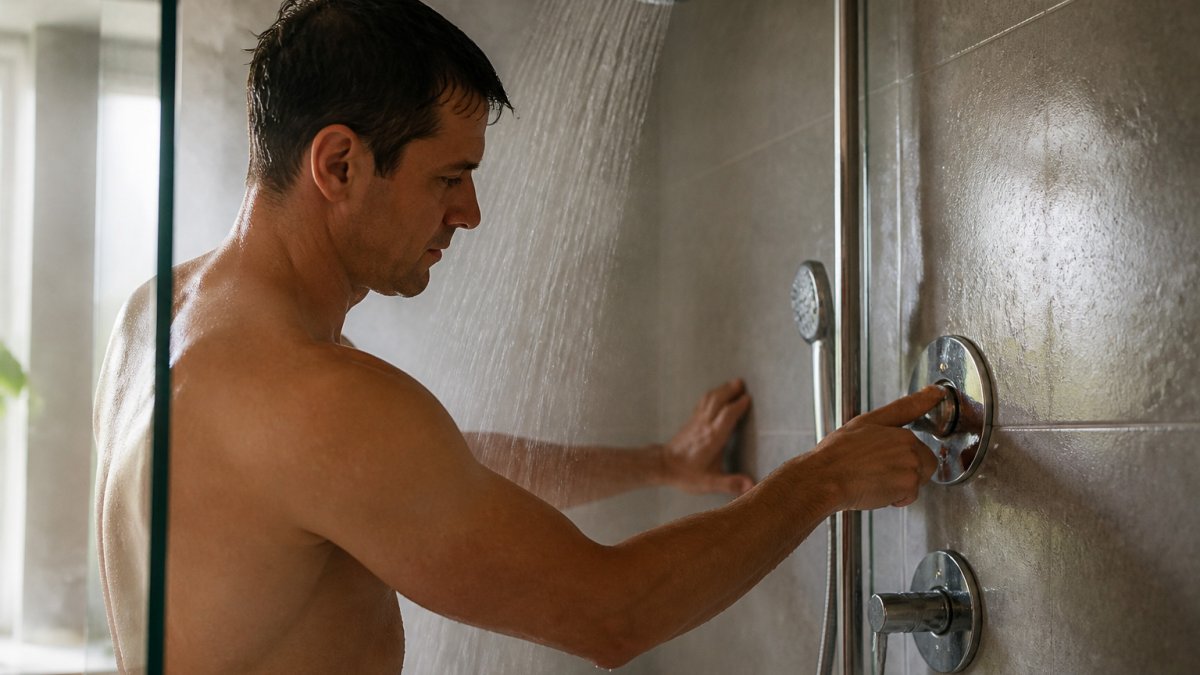
Temperatures. Use comfortably warm water for the hot phase, roughly in the range most people find pleasant for a normal shower, warm enough to relax the skin, not hot enough to redden or sting. For the cold phase, use water as cold as your tap runs; do not add ice or chase extreme cold. A common mistake is making the hot phase too hot to compensate for a cold phase that feels unpleasant.
Intervals. A standard starting point is 1 to 3 minutes of warm water followed by 15 to 30 seconds of cold, repeated for three to five rounds. That puts a full session at roughly 5 to 15 minutes including transitions. If you are new to contrast showers, start at the low end, one minute warm, 15 seconds cold, three rounds, and build over one to two weeks.
Sequence. Always finish on cold. The cold phase drives vasoconstriction and is the part most people associate with the alert, refreshed feeling. Finishing on warm leaves you relaxed but blunts that effect, and it is the opposite of the sequence used in most contrast-therapy protocols.
A simple starter sequence:
- Warm phase: 1 to 3 minutes, comfortably warm
- Cold phase: 15 to 30 seconds, as cold as the tap runs
- Rounds: 3 to 5 cycles
- Finish: end on cold, then dry off quickly and dress warmly
Progression. Increase cold duration before you increase cold intensity. Moving from 15 to 30 seconds of cold is a smaller physiological jump than dropping the water temperature sharply. Add rounds only after the current routine feels manageable for a week.
Frequency. Three to four sessions per week is a common pattern. Daily use is not required, and there is no evidence that more frequent showers produce better circulation outcomes. Consistency over several weeks matters more than intensity on any single day.
Safety screening before you start. Check with a doctor first if you have heart disease, high or low blood pressure that is not well controlled, a history of blood clots, diabetes with nerve or circulation problems, Raynaud's phenomenon, or a history of fainting. Pregnant people, older adults at higher fall risk, and anyone recovering from recent surgery or injury should also ask first.
When to stop mid-session. Stop right away if you feel dizzy, faint, short of breath, experience chest discomfort, or notice numbness that does not fade. Lightheadedness when stepping from hot to cold is the most common problem, and it is more likely if the hot phase was very hot or the bathroom is steamy. Keep the room ventilated and step out slowly.
Watch out: a contrast shower is not a substitute for medical care, and the most common way people get hurt is by making the hot phase hotter and the cold phase colder than the protocol calls for.
How Long to Do Contrast Showers for Best Results
Most routines last 5 to 15 minutes in total, including the rounds. Longer is not automatically better. Sessions that run much past 15 minutes can leave people chilled, especially in cold rooms.
For a practical schedule, many people try three to four sessions a week and track how their legs and feet feel. Consistency tends to matter more than intensity. If you notice no change after a few weeks, the routine may simply not suit you, and that is useful information too.
Contrast Shower Side Effects and When to Stop
Contrast showers are generally safe for healthy adults, but they can cause problems for some people. Stop right away if you feel dizzy, faint, short of breath, chest discomfort, or numbness that does not fade.
Common issues include:
- Feeling chilled or shaky after the cold phase
- Lightheadedness when stepping out of a hot shower into cold water
- Skin irritation or redness from very hot or very cold water
- Increased discomfort if you already have sore or swollen legs
Keep water temperatures within a comfortable range. Extreme heat and cold add risk without adding benefit.
Who Should Avoid Contrast Showers and When to Ask a Doctor
Some people should check with a doctor before trying contrast showers. This includes anyone with heart disease, high or low blood pressure problems, blood clots, diabetes with nerve or circulation problems, Raynaud's phenomenon, or a history of fainting.
Pregnant people, older adults at higher fall risk, and anyone who has had a recent surgery or injury should also ask first. Talk to a doctor if you have leg swelling that appears on one side only, pain in your calves, or skin color changes, since these symptoms need evaluation rather than a home routine.
Contrast Therapy for Circulation: Setting Realistic Expectations and Your Next Step
Contrast showers are a low-cost, low-risk habit that many people enjoy. They may give a short-term feeling of better blood flow and can be part of a broader wellness routine. They are not a guaranteed cure for poor circulation.
Our recommendation is to try a simple routine for two to three weeks, keep notes on how your legs and energy feel, and stop if anything seems wrong. For people with lasting circulation concerns, a medical checkup is the right first step.
Frequently Asked Questions
Do contrast showers really work?
Contrast showers can produce short-term changes in blood flow, because heat widens blood vessels and cold narrows them. Small studies on hot and cold immersion suggest possible benefits for muscle soreness and swelling, but most of that research uses baths or immersion rather than showers. Evidence that contrast showers improve circulation over the long term is limited. Treat them as a comfortable, low-cost habit rather than a proven treatment, and talk with a clinician if you have a specific circulation problem.
How long should I stay in a contrast shower?
A common approach is to alternate between warm and cool water for a total of about 10 to 15 minutes, ending on cool. Many people start with shorter intervals, such as 30 to 60 seconds in each temperature, and build up over time. Stop if you feel dizzy, lightheaded, or uncomfortable. Water that is too hot or too cold can cause problems, so keep temperatures comfortable rather than extreme. Adjust based on how your body responds.
What are the side effects of contrast showers?
Most people tolerate contrast showers well, but possible side effects include lightheadedness, dizziness, skin irritation, or a temporary rise or drop in blood pressure. People with heart conditions, blood pressure problems, or diabetes may react more strongly to temperature changes. If you feel faint, short of breath, or have chest discomfort, stop immediately and seek medical care. Stay hydrated and avoid sudden jumps between very hot and very cold water.
Can contrast showers help with sore muscles?
Some people find that alternating warm and cool water eases muscle soreness after exercise, and the feeling of recovery may be real even when the physiological benefit is modest. Research on delayed-onset muscle soreness mostly involves cold immersion or contrast baths rather than showers. Contrast showers are a reasonable low-effort option, but they should complement rest, hydration, and gradual training rather than replace them.