 ultimate-guide
Are Natural Supplements Worth It? A 2026 Guide
Table of Contents
- Why Natural Supplements Are Booming in 2026
- The Myth of Natural Safety: What the Label Doesn't Tell You
- FDA Regulation of Dietary Supplements: What It Actually Covers
- How to Choose High Quality Supplements: 7 Evidence-Based Checks
- Bioavailability, Placebo Effect, and What the Research Really Shows
- Risks of Over-Supplementation and Drug-Nutrient Interactions
- When Are Natural Supplements Worth It? A Decision Framework
- Frequently Asked Questions
Last Updated: September 15, 2026
Why Natural Supplements Are Booming in 2026
Walk into any pharmacy or scroll through any wellness feed and you'll see the same story: shelves packed with capsules, gummies, and powders promising better immunity, more energy, and stronger circulation. The appeal is easy to understand. People want to stay well without a prescription, and "natural" sounds safer than anything synthetic.
That's the question this guide from Flu-Jack sets out to answer: are natural supplements worth it? The honest answer is that it depends on what you're taking, why you're taking it, and whether the product is actually what the label claims. Below, we'll break down the regulation, the science, and a practical framework you can use before you spend another dollar.
Natural supplements are dietary products made from plant, mineral, or animal sources and sold to support health rather than treat disease. They include vitamins, minerals, herbs, and botanical products, and they sit in a category the FDA treats differently from drugs.
That distinction matters more than most buyers realize, and it shapes everything from label accuracy to how much clinical evidence stands behind a claim.
The Myth of Natural Safety: What the Label Doesn't Tell You
The biggest mistake with natural products is assuming "natural" means "safe in any amount." It doesn't. Arsenic is natural. So is hemlock. The word describes a source, not a safety profile.
A common approach among experienced buyers is to treat "natural" as a starting point, not a verdict. Botanical products can interact with prescription medications, and some carry real adverse health effects at high doses. What most guides miss is that the risk often comes from dose and purity, not from the plant itself.
- Natural does not mean risk-free
- Dose determines toxicity, not origin
- Purity depends on manufacturing, not marketing
If you're taking any prescription medication, check with a pharmacist before adding a supplement to your routine.
FDA Regulation of Dietary Supplements: What It Actually Covers
Here's the part most people get wrong. The FDA regulates dietary supplements as a subcategory of food, not as drugs. That single classification explains almost everything about how these products reach a shelf.
The framework comes from the Dietary Supplement Health and Education Act of 1994, usually shortened to DSHEA (the FDA). Under DSHEA, a supplement does not need pre-market approval for safety or effectiveness the way a prescription or over-the-counter drug does. The manufacturer is responsible for ensuring the product is safe and that its label claims are truthful and not misleading. The FDA's role is largely post-market: it monitors adverse event reports, inspects facilities, and can act when a product is adulterated or a claim crosses into drug territory.
A few concrete pieces of that system are worth knowing by name, because they are the levers you can actually pull as a buyer:
- New Dietary Ingredient notifications. If a manufacturer wants to market an ingredient that was not sold in the U.S. before October 15, 1994, it generally must notify the FDA at least 75 days before marketing and provide a basis for concluding the ingredient is reasonably expected to be safe (the FDA). Not every company files, and a missing notification is a real red flag.
- Structure/function claims. A label may say a product "supports immune function" or "helps maintain healthy circulation." It may not say it "treats," "prevents," "cures," or "mitigates" a disease. Those disease claims would make it an unapproved drug. The disclaimer you see on many labels, that the statement has not been evaluated by the FDA and the product is not intended to diagnose, treat, cure, or prevent any disease, is required for structure/function claims.
- Current Good Manufacturing Practice. The FDA has cGMP requirements specific to dietary supplements covering identity, purity, strength, composition, and labeling. Compliance is not verified before sale; it is checked during inspections.
- Adverse event reporting. Manufacturers, packers, and distributors whose name appears on the label must report serious adverse events to the FDA. That reporting is a major reason problems surface after launch rather than before.
- Warning letters and recalls. When the FDA finds an unlawful claim, an undeclared pharmaceutical ingredient, or a cGMP failure, it typically issues a public warning letter or announces a recall. Both are searchable.
What does that mean for you as a buyer? You carry more of the verification burden. The FDA's dietary supplement guidance lays out labeling requirements, but it does not certify that a specific bottle works. That job falls to third-party testing and your own reading of the label.
This is also why the phrase "FDA registered" on a label means less than it sounds like. Registration is not approval, and it is not a finding that the product is safe or effective. Treat it as a filing, not an endorsement.
How to Choose High Quality Supplements: 7 Evidence-Based Checks
Learning how to choose high quality supplements comes down to verifying what the manufacturer won't always tell you. Quality assurance is not a marketing phrase; it's a set of checks you can run yourself in a few minutes.
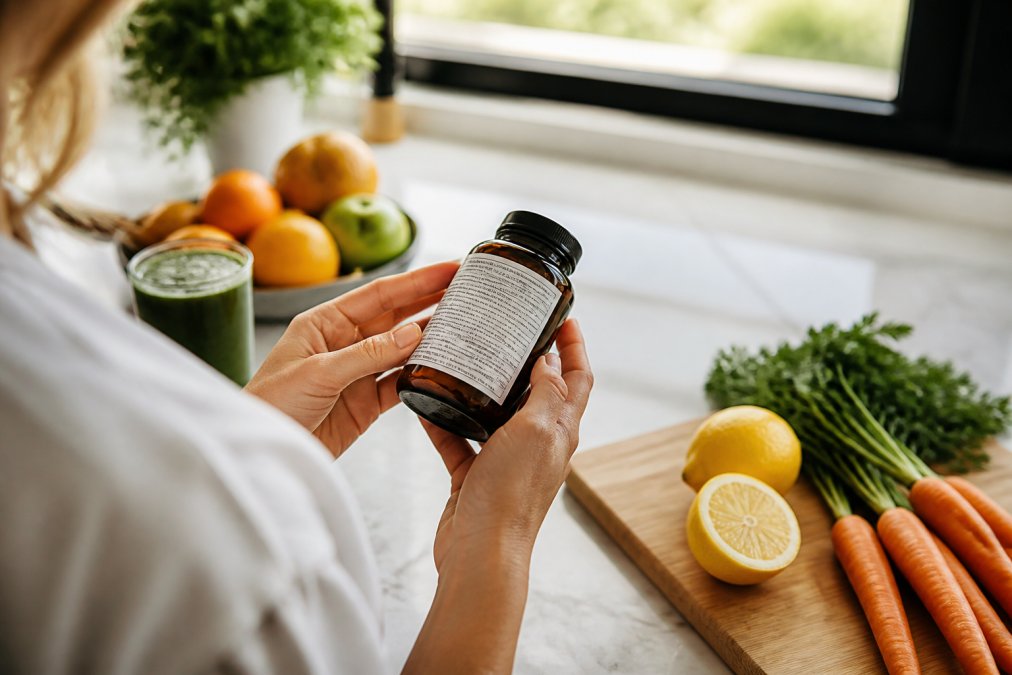
Use this checklist before buying:
- Look for third-party testing seals from independent labs
- Check that each ingredient lists a specific amount, not a "proprietary blend"
- Confirm the serving size matches how you'll actually take it
- Scan for fillers, artificial colors, and unnecessary additives
- Verify the expiration date and storage instructions
- Search the brand for FDA warning letters or recalls
- Match the formula to your actual need, not a vague "wellness" goal
Label transparency separates serious manufacturers from the rest. If a company won't disclose amounts, assume the worst.
Bioavailability, Placebo Effect, and What the Research Really Shows
Two forces shape whether a supplement actually helps you: how well your body absorbs it, and how much of the benefit is in your head. Most articles stop at naming those two forces. This section goes a level deeper, because the details are where the money is either well spent or wasted.
Bioavailability is the proportion of a nutrient that enters your bloodstream and reaches the tissue where it's needed. A capsule can contain the perfect dose and still deliver almost none of it if the form is poorly absorbed. The label rarely tells you which form you're getting, and that omission is often the difference between a product that works and one that doesn't.
A few well-documented examples show how much form matters:
- Magnesium. Magnesium oxide is cheap and common, but it is poorly absorbed and is used clinically more as a laxative than as a way to raise magnesium status. Magnesium citrate and magnesium glycinate are absorbed considerably better, and glycinate tends to be gentler on the digestive tract.
Risks of Over-Supplementation and Drug-Nutrient Interactions
When Are Natural Supplements Worth It? A Decision Framework
Use this framework to decide:
| Your Situation | Worth It? | Why |
|---|---|---|
| Diagnosed deficiency | Yes | Targeted correction with a clinician's guidance |
| Restricted diet or poor intake | Often | Helps fill a known nutritional gap |
| General "just in case" buying | Rarely | No clear target, no way to measure results |
| Taking multiple prescriptions | Only with review | Interaction risk outweighs blind use |
| Chasing a vague wellness goal | Rarely | Hard to tell real benefit from placebo |
Frequently Asked Questions
Why do doctors discourage supplements?
Many doctors discourage supplements because dietary supplements are not required to prove effectiveness before being sold. Unlike pharmaceutical drugs, which must pass FDA clinical trials, supplements can reach shelves with limited clinical evidence. Doctors also worry about drug-nutrient interactions, especially with prescription medications, and about the risks of over-supplementation. That said, some doctors recommend specific supplements for documented nutritional deficiencies or preventative health needs, so the guidance varies based on your individual health profile and bloodwork.
How can you tell if a supplement brand is high-quality?
Look for third-party testing seals from organizations like NSF International, USP, or ConsumerLab. These certifications verify that the product contains what the label claims, in the stated therapeutic dose, without harmful contaminants. Check for label transparency: a good brand lists every ingredient, including fillers and botanical products, with amounts. Scan for a supplement facts panel that matches the serving size to what research supports. Brands that publish their certificate of analysis or batch testing results online give you the most confidence in quality assurance.
Do natural supplements provide the same benefits as whole foods?
Natural supplements do not fully replicate the benefits of whole foods. Whole foods contain a complex matrix of micronutrients, fiber, and bioactive compounds that work together in ways isolated supplements cannot copy. For example, the vitamin C in an orange comes with flavonoids that may improve absorption. However, supplements can fill specific gaps when your diet falls short or when a health condition increases your need for a nutrient. The best approach is usually a balanced diet first, with targeted supplementation for documented deficiencies or preventative health goals.
What are the risks of taking unregulated natural supplements?
Unregulated natural supplements carry several risks. Without third-party testing, products may contain contaminants like heavy metals, pesticides, or even prescription drugs not listed on the label. Some botanical products can cause adverse health effects, including liver damage, especially when taken at high doses or combined with other supplements. Drug-nutrient interactions are a real concern: St. John's Wort, for instance, reduces the effectiveness of certain birth control pills and antidepressants. Always check with your healthcare provider before starting any supplement, particularly if you take prescription medications or have chronic health conditions.